
Executive Summary
Housing Market Area Description
The Deltona-Daytona Beach-Ormond Beach, FL metropolitan area is located in the northeastern part of the state of Florida. It encompasses Volusia and Flagler counties, offering a diverse landscape that includes coastal regions along the Atlantic Ocean. The metropolitan area is situated near other significant Florida cities, providing a strategic location for residents who may commute to nearby urban centers for employment or leisure. The area's proximity to the coastline makes it a popular destination for both residents and tourists seeking beach-related activities and scenic views.
The economy of the Deltona-Daytona Beach-Ormond Beach metropolitan area is heavily influenced by tourism, motorsports, and related industries. The Daytona International Speedway is a notable landmark, attracting visitors from across the nation for events such as the Daytona 500. This motorsport venue is a key driver of economic activity, contributing significantly to the local hospitality and service sectors. Additionally, the area's historical significance as the birthplace of automobile racing adds to its cultural and economic appeal. The tourism industry is further bolstered by the area's natural beauty and recreational opportunities, drawing visitors year-round.
As of January 1, 2026, the population of the Deltona-Daytona Beach-Ormond Beach metropolitan area is 746,933. This represents an increase from the 2023 population of 721,796, indicating steady growth in the region. The area's appeal as a tourist destination and its historical significance contribute to its attractiveness for new residents and businesses. Ormond Beach, in particular, is renowned for its historical charm and is recognized as the birthplace of automobile racing, adding a unique cultural dimension to the metropolitan area.
Tools and Resources
- Find interim updates for this metropolitan area, and select geographies nationally, at PD&R's Market-at-a-Glance tool.
- Additional data for the HMA can be found in this report's supplemental tables and the
*.audit.jsonsidecar file written beside this markdown. - For information on HUD-supported activity in this area, see the Community Assessment Reporting Tool.
Market Qualifiers
Economy
The Deltona-Daytona Beach-Ormond Beach, FL metropolitan area experienced an increase in nonfarm payrolls during the 12 months ending February 2026, with an addition of approximately 1,030 jobs, representing a growth of 0.45 percent. This modest increase in employment reflects a steady economic environment in the region. However, the unemployment rate rose to 4.83 percent, up from 3.98 percent a year earlier, indicating a shift towards a slightly slack labor market. The current unemployment rate suggests that the labor market is slightly slack, as it exceeds the neutral benchmark range of 4 to 5 percent.
The increase in the unemployment rate may be attributed to various factors, including changes in the local economy and potential shifts in labor force participation. Despite the rise in unemployment, the overall job market remains relatively stable, with continued opportunities for employment growth. The service-providing sectors, which are significant contributors to the local economy, may have experienced fluctuations that impacted the overall employment landscape. The increase in nonfarm payrolls, although modest, indicates resilience in the face of economic challenges.
During the 3-year forecast period, payrolls are expected to increase at an average annual rate of approximately 0.5 percent. This projection suggests a gradual strengthening of the labor market, with potential for job growth across various sectors. The anticipated increase in employment may contribute to a more balanced labor market, aligning closer to the neutral benchmark range. As the metropolitan area continues to adapt to economic changes, the focus on job creation and workforce development will be crucial in supporting sustained economic growth.
The outlook for the Deltona-Daytona Beach-Ormond Beach, FL metropolitan area remains cautiously optimistic, with expectations of continued job growth and economic stability. Efforts to attract new businesses and support existing industries may play a vital role in enhancing the region's economic prospects. The anticipated increase in payrolls during the forecast period reflects a positive trajectory for the local economy, with potential benefits for residents and businesses alike. As the area navigates the evolving economic landscape, maintaining a focus on workforce development and economic diversification will be essential for long-term success.
Home Sales Market
The sales housing market in the metropolitan area is currently balanced. The average sales price for new homes is $403,175, representing an increase of 4.3 percent from the previous year. In contrast, the average sales price for existing homes is $355,189, which is down 3.7 percent from the previous year. The mortgage interest rate context is not specified, but it is an important factor influencing homebuyer affordability and market dynamics. During the forecast period, demand is expected for approximately 17,610 new sales units, indicating a steady need for housing development to meet market requirements.
The total number of home sales in the metropolitan area was approximately 13,281 during the 12 months ending in the fourth quarter of 2024, down 3.5 percent from the previous year. This decline in sales activity suggests a cooling in the market, which may be attributed to various economic factors, including changes in consumer confidence and affordability constraints. The months of inventory available for sale is approximately 6.8 months, which aligns with balanced market conditions, indicating that supply and demand are relatively in equilibrium. The number of homes under construction is 3,666, reflecting ongoing efforts to address housing demand and maintain market stability.
The decline in existing home prices suggests a shift in buyer preferences or market adjustments, possibly influenced by broader economic conditions. The increase in new home prices indicates continued demand for newly constructed homes, which may offer modern amenities and energy efficiency that appeal to buyers. The balanced market conditions suggest that neither buyers nor sellers have a distinct advantage, and transactions are occurring at a steady pace. The forecasted demand for new sales units underscores the need for continued residential development to accommodate population growth and household formation in the metropolitan area.
The housing market dynamics are influenced by various factors, including economic growth, employment trends, and demographic shifts. The balanced conditions in the sales market suggest that the metropolitan area is experiencing stable economic conditions, with sufficient housing supply to meet current demand. The ongoing construction activity and forecasted demand for new sales units indicate a positive outlook for the housing market, with opportunities for growth and development in the coming years. The interplay between new and existing home prices, along with market conditions, will continue to shape the housing landscape in the metropolitan area.
Rental Market
The apartment rental market in the metropolitan area is currently slightly soft. The vacancy rate stands at 7.82 percent, up from 7.46 percent a year earlier. This increase in vacancy rates indicates a loosening in the rental market, which is further evidenced by the decline in average rent. The average rent is currently $1,380, representing a decrease of 3.46 percent from the previous year. This decline in rent suggests that demand for rental units is not keeping pace with supply.
The demand for rental units in the metropolitan area is currently at 8,287 units. Despite this demand, there are 844 units under construction, which may contribute to an oversupply if demand does not increase significantly. The current conditions suggest that additional rental construction during the forecast period could exacerbate the existing imbalance between supply and demand. A careful assessment of future demand trends will be crucial to avoid further softening of the rental market.
The slightly soft conditions in the rental market may be influenced by various factors, including economic conditions and population dynamics. The increase in vacancy rates and the decline in average rent could be indicative of a shift in housing preferences or economic constraints faced by potential renters. It is essential to monitor these trends closely to understand the underlying causes and to anticipate future changes in the rental market.
Given the current market conditions, stakeholders in the rental housing sector should consider strategies to stimulate demand or adjust supply to achieve a more balanced market. This may include targeted marketing efforts, incentives for renters, or a reevaluation of planned construction projects. By aligning supply with demand, the metropolitan area can work towards stabilizing the rental market and ensuring sustainable growth in the future.
3-Year Housing Demand Forecast
| Line Item | Sales Units | Rental Units |
|---|---|---|
| Deltona-Daytona Beach-Ormond Beach HMA Total Demand | 17,610 | 8,287 |
| Under Construction | 3,666 | 844 |
Total demand represents the estimated production necessary to achieve a balanced market at the end of the forecast period. The forecast period is from the as-of date to 3 years forward.
Notable Conditions and Recent Developments
The Deltona-Daytona Beach-Ormond Beach, FL metropolitan area has experienced significant population growth, with the population increasing to 746,933 as of February 2026, up from 668,921. This growth represents an increase of 78,012 people, or approximately 11.7 percent, over the period. The rise in population is indicative of strong net in-migration, which has been a key driver of housing demand in the area. As more individuals and families move to the region, the demand for both owner-occupied and rental housing has increased, influencing the overall housing market dynamics.
Sales conditions in the metropolitan area are currently balanced, suggesting that the supply of homes for sale is roughly in line with demand. In contrast, rental conditions are slightly soft, indicating a higher availability of rental units compared to demand. This divergence may be attributed to the recent influx of new residents who are opting to purchase homes rather than rent, possibly due to favorable mortgage rates or the desire for homeownership. For buyers, the balanced sales market implies a stable environment with moderate price appreciation, while renters may find more options and potentially more competitive rental rates.
The housing market in the Deltona-Daytona Beach-Ormond Beach area is also influenced by several supply-side factors, including insurance costs, property taxes, and construction expenses. Rising insurance premiums, particularly in coastal areas, can affect the affordability of homeownership and may deter potential buyers. Additionally, property taxes can impact the overall cost of owning a home, influencing both buyer decisions and the types of housing developments that are financially viable. Construction costs, which have been increasing, also play a critical role in shaping the supply of new housing, potentially limiting the number of new units brought to market.
Distinctive features of the Deltona-Daytona Beach-Ormond Beach metropolitan area include its appeal as a tourist destination and its significant retiree population. The area's coastal location and attractions contribute to seasonal fluctuations in housing demand, particularly in the rental market, as tourists and seasonal residents seek short-term accommodations. The retiree population, drawn by the region's amenities and climate, also impacts housing preferences, with a potential emphasis on single-story homes and communities with age-related amenities. These factors collectively contribute to the unique housing market dynamics observed in this metropolitan area.
Economic Conditions
Primary Local Economic Factors
The Deltona-Daytona Beach-Ormond Beach, FL metropolitan area is characterized by a diverse economic base with significant contributions from the education and health services sector, which employs 48,000 individuals. This sector is supported by major employers such as Volusia County Schools, AdventHealth, and Halifax Health, which together employ over 21,000 people. The trade, transportation, and utilities sector is also a key component of the local economy, providing jobs for 45,000 individuals, with notable employers including Publix Super Markets and Walmart. The leisure and hospitality sector, employing 35,209 people, reflects the area's status as a popular tourist destination, renowned for its beaches and motorsports events.
The metropolitan area is home to the Daytona International Speedway, a major attraction that draws visitors from around the world. The region's tourism industry is bolstered by its reputation as a hub for motorsports and coastal recreation, with Ormond Beach recognized as the birthplace of automobile racing. The area's natural beauty and historical significance contribute to its appeal as a tourist destination. The presence of the Halifax River and the Atlantic Ocean further enhances the region's attractiveness for both residents and visitors.
Demographic trends in the Deltona-Daytona Beach-Ormond Beach metropolitan area indicate a growing population, with a total of 721,796 residents in 2023. The area's appeal to retirees and those seeking a coastal lifestyle contributes to net in-migration, which has been a significant driver of population growth. The aging population is likely to continue driving demand in the education and health services sector, as healthcare needs increase. Additionally, the area's popularity as a tourist destination supports employment in the leisure and hospitality sector, which is expected to remain robust during the forecast period.
The economic landscape of the metropolitan area is shaped by both opportunities and challenges. The presence of major employers in the education and health services sector provides stability and growth potential. However, the area's reliance on tourism and hospitality makes it susceptible to economic fluctuations and external factors affecting travel and leisure activities. The ongoing development of infrastructure and amenities aimed at enhancing the region's appeal to both residents and tourists will be crucial in sustaining economic growth and attracting new businesses and residents.
Table 1. Major Employers in the Deltona-Daytona Beach-Ormond Beach HMA
| Name of Employer | Nonfarm Payroll Sector | Approx. Employees |
|---|---|---|
| Volusia County Schools | Education & Health Services | 9,356 |
| AdventHealth | Education & Health Services | 7,794 |
| Halifax Health | Education & Health Services | 4,000 |
| Publix Super Markets | Wholesale & Retail Trade | 3,806 |
| Walmart | Wholesale & Retail Trade | 3,500 |
Estimates via Zoomprop research (Tavily live search of local economic-development and state workforce sources). Excludes local school districts.
Current Conditions — Nonfarm Payrolls
Nonfarm payrolls in the Deltona-Daytona Beach-Ormond Beach, FL metropolitan area increased to 229,354 jobs during the 12 months ending February 2026, up by 1,030 jobs or 0.45 percent from the previous year. This growth represents a deceleration compared with the previous 12-month period. The overall increase in employment was supported by gains in several service-providing sectors, although some sectors experienced declines.
The education and health services sector led job growth among the service-providing sectors, adding 1,217 jobs, a 2.6 percent increase. This growth may be attributed to ongoing expansions in healthcare facilities and educational institutions in the area. The financial activities sector also experienced a notable increase, with an addition of 303 jobs, representing a 2.9 percent rise. The leisure and hospitality sector contributed to the overall employment gains with an increase of 217 jobs, or 0.6 percent, likely driven by the area's appeal as a tourist destination.
In the goods-producing sectors, the manufacturing sector experienced a decline, losing 144 jobs, a decrease of 1.1 percent. This reduction may be linked to slowing residential construction activity, which often impacts demand for manufactured goods. The mining and logging and construction sectors did not report specific changes in employment, indicating stability or lack of significant activity in these areas.
The information sector experienced a sharp decline, losing 103 jobs, a decrease of 5.5 percent. This significant reduction may reflect broader industry trends, such as technological advancements reducing the need for certain roles or shifts in consumer demand impacting the sector. The government sector also saw a slight decrease, shedding 23 jobs, a 0.08 percent decline, which may be due to budgetary constraints or reallocation of resources within the sector.
Table 2. 12-Month Change in Nonfarm Payroll Jobs in the Deltona-Daytona Beach-Ormond Beach HMA, by Sector
| Sector | Current (jobs) | Year Earlier (jobs) | Abs. Δ | % Δ |
|---|---|---|---|---|
| Total Nonfarm Payrolls | 229,355 | 228,325 | +1,030 | 0.5% |
| Manufacturing | 12,573 | 12,717 | -144 | -1.1% |
| Trade, Transportation & Utilities | 45,000 | 45,108 | -108 | -0.2% |
| Information | 1,764 | 1,867 | -103 | -5.5% |
| Financial Activities | 10,636 | 10,333 | +303 | 2.9% |
| Professional & Business Services | 25,536 | 25,775 | -239 | -0.9% |
| Education & Health Services | 48,000 | 46,783 | +1,217 | 2.6% |
| Leisure & Hospitality | 35,209 | 34,992 | +217 | 0.6% |
| Other Services | 8,445 | 8,292 | +154 | 1.9% |
| Government | 27,227 | 27,250 | -23 | -0.1% |
Source: U.S. Bureau of Labor Statistics (CES). Rows where CES is suppressed at this MSA are reconstructed from QCEW county-level annual data.
Annual nonfarm payrolls — Deltona-Daytona Beach-Ormond Beach HMA, 10-year trend (annual average, thousands)
| Year | Total nonfarm (000s) | YoY Δ (000s) | YoY Δ % |
|---|---|---|---|
| 2016 | 196.0 | — | — |
| 2017 | 200.0 | +4.0 | 2.1% |
| 2018 | 203.9 | +3.9 | 2.0% |
| 2019 | 206.2 | +2.4 | 1.2% |
| 2020 | 198.2 | -8.0 | -3.9% |
| 2021 | 208.3 | +10.1 | 5.1% |
| 2022 | 216.8 | +8.6 | 4.1% |
| 2023 | 223.8 | +6.9 | 3.2% |
| 2024 | 228.2 | +4.4 | 2.0% |
| 2025 | 229.3 | +1.1 | 0.5% |
Source: U.S. Bureau of Labor Statistics (CES).
Sector Deep Dive — Education & Health Services
The Education & Health Services sector in the Deltona-Daytona Beach-Ormond Beach, FL metropolitan area currently supports 48,000 jobs. This sector has experienced a notable increase over the past year, adding 1,217 jobs, which represents a growth of 2.6 percent. This expansion underscores the sector's critical role in the local economy, contributing significantly to the overall employment landscape. The increase in jobs within this sector reflects broader trends in the region, where demand for education and health services continues to rise.
Key employers within the Education & Health Services sector include Volusia County Schools, AdventHealth, and Halifax Health. Volusia County Schools is the largest employer in this sector, with 9,356 employees. AdventHealth follows closely with 7,794 employees, while Halifax Health employs 4,000 individuals. These organizations are pivotal in driving employment within the sector, providing a wide range of services that cater to the educational and healthcare needs of the community.
The growth in the Education & Health Services sector can be attributed to several qualitative factors. The aging population in the region has increased the demand for healthcare services, necessitating a larger workforce to meet these needs. Additionally, the presence of educational institutions such as Volusia County Schools highlights the importance of education in the area, further driving employment in this sector. The combination of these factors contributes to the sector's robust performance and its ability to sustain job growth.
Looking ahead, the Education & Health Services sector is expected to continue its upward trajectory over the next three years. The ongoing demand for healthcare services, driven by demographic trends, is likely to support further job creation. Additionally, investments in educational infrastructure and services may bolster employment opportunities within the sector. As the metropolitan area continues to grow, the Education & Health Services sector is poised to remain a vital component of the local economy, supporting both employment and community well-being.
Current Conditions — Unemployment
During the 12 months ending October 2023, the average unemployment rate in the Deltona-Daytona Beach-Ormond Beach, FL metropolitan area was 4.8 percent, up from 4.0 percent during the previous 12-month period. This increase indicates a slightly slack labor market, as the unemployment rate has risen over the past year. The labor market conditions reflect a shift from the previous year, where the unemployment rate was lower, suggesting that the area has experienced some economic challenges or changes in employment dynamics.
The unemployment rate in the metropolitan area is higher than both the state of Florida and the nation. The state of Florida reported an unemployment rate of 4.0 percent, while the national rate was 4.3 percent during the same period. This comparison highlights that the Deltona-Daytona Beach-Ormond Beach area is experiencing more significant labor market challenges relative to broader state and national trends. The higher unemployment rate in the metropolitan area may be attributed to specific local economic factors or industry-specific issues that are not as prevalent at the state or national level.
Examining the longer-term trend, the unemployment rate in the metropolitan area has fluctuated over the past several years. In 2016, the unemployment rate was 5.3 percent, which decreased steadily to a low of 3.6 percent in 2019. However, the rate spiked to 8.1 percent in 2020, reflecting the impact of the COVID-19 pandemic. Since then, the unemployment rate has generally declined, reaching 3.4 percent in 2023, before rising again to 4.7 percent in 2025. This trend indicates that while the area has made progress in recovering from the pandemic-induced peak, recent increases suggest ongoing volatility in the labor market.
Annual average unemployment rate — Deltona-Daytona Beach-Ormond Beach HMA
| Year | Unemployment rate |
|---|---|
| 2016 | 5.3% |
| 2017 | 4.6% |
| 2018 | 3.9% |
| 2019 | 3.6% |
| 2020 | 8.1% |
| 2021 | 4.9% |
| 2022 | 3.4% |
| 2023 | 3.4% |
| 2024 | 3.9% |
| 2025 | 4.7% |
Source: U.S. Bureau of Labor Statistics (LAUS).
Commuting Patterns and Labor Force Dynamics
The Deltona-Daytona Beach-Ormond Beach, FL metropolitan area is characterized by its coastal geography and proximity to major transportation routes, including Interstate 95, which facilitates north-south travel along the eastern seaboard. The area's location along the Atlantic coast makes it a desirable destination for both residents and tourists, contributing to a dynamic commuting pattern. The presence of nearby metropolitan areas such as Orlando further influences commuting trends, as residents may travel to these adjacent regions for employment opportunities. The combination of coastal amenities and accessible transportation infrastructure supports a diverse range of commuting options for the local workforce.
Labor force participation in the Deltona-Daytona Beach-Ormond Beach metropolitan area is influenced by several demographic factors, including an aging population and a significant number of retirees. The area's appeal as a retirement destination contributes to a higher proportion of older residents, which can affect overall labor force participation rates. Additionally, the local economy's reliance on tourism creates a seasonal workforce dynamic, with employment levels fluctuating in response to tourist activity. The current unemployment rate in the metropolitan area is 4.8 percent, reflecting both the challenges and opportunities present in the local labor market.
The shift toward remote and hybrid work arrangements during the pandemic has had a notable impact on commuting patterns and residential location choices in the Deltona-Daytona Beach-Ormond Beach metropolitan area. As more employers adopt flexible work policies, the demand for office space may decrease, leading to changes in the commercial real estate market. This shift also allows residents greater flexibility in choosing where to live, potentially increasing demand for housing in suburban and coastal areas. The long-term effects of these changes on the local economy and housing market will depend on the extent to which remote work becomes a permanent feature of the labor landscape.
Wages and Income
The Deltona-Daytona Beach-Ormond Beach, FL metropolitan area is characterized by a significant presence of leisure, retail, and healthcare industries. These sectors typically offer lower average wages compared to metropolitan areas dominated by professional and financial services. The local economy's reliance on tourism and healthcare services suggests that the average wage levels in the metropolitan area may be lower than those in regions with a higher concentration of high-paying industries. This economic structure influences the overall wage distribution and income levels within the metropolitan area.
The rising cost of living in the Deltona-Daytona Beach-Ormond Beach, FL metropolitan area presents challenges for residents, particularly for middle-quintile renters. Factors such as increasing home prices, higher insurance premiums due to the area's vulnerability to hurricanes, and rising property taxes contribute to the financial strain on households. While nominal wages may have experienced some growth, the pace of increase may not be sufficient to offset the escalating costs of living. As a result, real incomes for many residents are likely to be under pressure, affecting their purchasing power and financial stability.
Housing affordability remains a critical issue for existing residents in the metropolitan area. The combination of rising living costs and relatively modest wage growth exacerbates the affordability challenges faced by many households. For renters, in particular, the gap between income levels and housing costs can lead to increased financial burdens, limiting their ability to save or invest in other areas. This dynamic underscores the importance of addressing housing affordability to ensure that residents can maintain a reasonable standard of living in the face of economic pressures.
Economic Periods of Significance
2011 Through 2019
The Deltona-Daytona Beach-Ormond Beach, FL metropolitan area experienced a significant period of economic expansion from 2011 to 2019. During this time, the nonfarm payrolls increased steadily, reflecting a robust recovery from the previous economic downturn. In 2016, the nonfarm payrolls stood at 195,967 jobs, and by 2019, this figure had risen to 206,242 jobs. This represents an increase of 10,275 jobs over the three-year period, with an average annual growth rate of approximately 1.7 percent. The expansion during this period was characterized by consistent job gains across various sectors, contributing to the overall economic vitality of the metropolitan area.
The service-providing sectors were the primary drivers of job growth in the Deltona-Daytona Beach-Ormond Beach metropolitan area during the expansion period. These sectors typically include industries such as education and health services, professional and business services, and leisure and hospitality. The increase in employment within these sectors was indicative of broader economic trends, including rising consumer confidence and increased demand for services. The growth in leisure and hospitality, in particular, was likely supported by the area's appeal as a tourist destination, which attracted both domestic and international visitors.
In addition to the service-providing sectors, the goods-producing sectors also contributed to the overall employment growth in the metropolitan area. Although these sectors generally represent a smaller portion of the total employment base, they played a crucial role in supporting the expansion. The construction industry, for example, benefited from increased residential and commercial development, driven by population growth and net in-migration to the area. This sectoral growth not only provided direct employment opportunities but also stimulated demand for related industries, such as manufacturing and trade.
The period of expansion from 2011 to 2019 was marked by a favorable economic environment that supported job creation and economic development in the Deltona-Daytona Beach-Ormond Beach metropolitan area. The steady increase in nonfarm payrolls during this time reflects the resilience and adaptability of the local economy. As the metropolitan area continued to attract new residents and businesses, the economic landscape evolved to accommodate the changing needs of its population. This period of growth laid a strong foundation for future economic activity, positioning the area for continued prosperity in the years to come.
Overall, the expansion from 2011 to 2019 was a testament to the strength and diversity of the Deltona-Daytona Beach-Ormond Beach metropolitan area's economy. The consistent job gains across multiple sectors underscored the area's ability to capitalize on its unique assets and opportunities. As the metropolitan area looks to the future, the lessons learned during this period of growth will be instrumental in guiding its continued development and success.
2020
The Deltona-Daytona Beach-Ormond Beach, FL metropolitan area experienced a significant contraction in nonfarm payrolls during the 2020 pandemic. The total number of nonfarm jobs decreased to 198,208, down from 206,242 in 2019, representing a decline of 8,034 jobs or approximately 3.9 percent. This contraction marked a reversal from the steady growth observed in the preceding years, where nonfarm payrolls had increased consistently from 2016 through 2019. The pandemic-induced economic downturn had a profound impact on the local labor market, reflecting broader national trends during this period.
The leisure and hospitality sector was particularly hard hit in the metropolitan area, as restrictions on travel and social gatherings led to a sharp decline in tourism and related activities. This sector, which is a significant component of the local economy, faced substantial job losses as hotels, restaurants, and entertainment venues were forced to close or operate at reduced capacity. The wholesale and retail trade sectors also experienced weakness, as consumer spending patterns shifted and many brick-and-mortar establishments faced temporary closures. Conversely, the transportation and utilities sector often benefited from the surge in e-commerce, as increased online shopping drove demand for logistics and delivery services. Despite these sectoral disparities, the overall economic impact of the pandemic was a net loss in employment for the metropolitan area.
In 2021, the metropolitan area began to recover from the pandemic-induced contraction, with nonfarm payrolls rebounding to 208,283, an increase of 10,075 jobs or 5.1 percent from the previous year. This recovery was supported by the gradual reopening of the economy and the easing of public health restrictions, which allowed for a resurgence in leisure and hospitality activities. The wholesale and retail trade sectors also began to stabilize as consumer confidence improved and spending rebounded. The transportation and utilities sector continued to benefit from sustained e-commerce activity, contributing to the overall recovery in employment.
By 2022, the metropolitan area had surpassed pre-pandemic employment levels, with nonfarm payrolls reaching 216,842, up by 8,559 jobs or 4.1 percent from 2021. This growth trajectory continued into 2023 and 2024, with nonfarm payrolls increasing to 223,750 and 228,192, respectively. The recovery was characterized by a broad-based expansion across most sectors, although the pace of growth varied. The leisure and hospitality sector, in particular, experienced a robust rebound as tourism activity returned to the area. The transportation and utilities sector maintained its momentum, driven by ongoing demand for logistics services. Overall, the metropolitan area demonstrated resilience in the face of the pandemic's challenges, with employment levels continuing to rise through the forecast period.
2021 Through 2023
The Deltona-Daytona Beach-Ormond Beach, FL metropolitan area experienced a significant economic recovery from 2021 to 2023, as evidenced by the increase in nonfarm payrolls. In 2021, nonfarm payrolls averaged 208,283 jobs, marking a recovery from the decline observed in 2020, when the average was 198,208 jobs. By 2023, the average number of nonfarm payrolls had risen to 223,750 jobs, reflecting an average annual gain of approximately 7,734 jobs, or 3.6 percent, during this period. This recovery was driven by a resurgence in various sectors, particularly those that were heavily impacted by the pandemic.
The service-providing sectors played a pivotal role in the recovery of the metropolitan area. As businesses reopened and consumer confidence improved, sectors such as leisure and hospitality, retail trade, and education and health services saw substantial job gains. The leisure and hospitality sector, in particular, benefited from the return of tourism and increased local spending, contributing significantly to the overall employment growth. Additionally, the education and health services sector expanded as demand for healthcare services increased and educational institutions adapted to new operating conditions.
Manufacturing and construction sectors also contributed to the economic recovery in the Deltona-Daytona Beach-Ormond Beach metropolitan area. The construction sector experienced growth due to increased residential and commercial development, driven by favorable interest rates and net in-migration to the area. Manufacturing, although a smaller component of the local economy, saw improvements as supply chain disruptions eased and production levels increased to meet rising demand.
The recovery period from 2021 to 2023 was marked by strategic investments and expansions within the metropolitan area. Local government initiatives to support small businesses and attract new industries played a crucial role in revitalizing the economy. The area's appeal as a destination for retirees and remote workers further bolstered economic activity, contributing to population growth and increased demand for housing and services.
Overall, the Deltona-Daytona Beach-Ormond Beach metropolitan area demonstrated resilience and adaptability during the recovery period. The combination of sectoral growth, strategic investments, and demographic trends positioned the area for continued economic expansion. As the metropolitan area moves forward, maintaining momentum in job creation and addressing potential challenges such as housing affordability and infrastructure development will be essential to sustaining long-term growth.
Forecast
The Deltona-Daytona Beach-Ormond Beach, FL metropolitan area is expected to experience an annual growth rate of 1.9 percent in nonfarm payrolls over the next three years. This growth is anticipated to be driven primarily by the service-providing sectors, which have historically been a significant component of the local economy. The current level of nonfarm payrolls stands at approximately 229,400 jobs, and this expansion is likely to be supported by continued demand in sectors such as healthcare, education, and leisure and hospitality. These sectors are expected to benefit from the area's appeal as a retirement and tourist destination, contributing to job creation and economic vitality during the forecast period.
However, several factors may pose challenges to the economic forecast for the metropolitan area. Elevated interest rates could dampen consumer spending and business investment, potentially slowing economic growth. Additionally, property-insurance costs remain a concern in hurricane-prone markets like Florida, which could impact housing affordability and deter potential in-migrants. Demographic aging may also exert pressure on the labor market, as a growing proportion of the population retires, potentially leading to a tighter labor supply. Furthermore, any moderation in net in-migration could reduce the pace of economic expansion, as population growth has been a key driver of demand in the region. These factors will need to be closely monitored as they could influence the overall economic trajectory during the forecast period.
Population and Households
Population Trends
The population of the Deltona-Daytona Beach-Ormond Beach, FL metropolitan area experienced significant growth from 2010 to 2020. During this period, the population increased from 671,822 in 2020, marking an average annual growth of approximately 6,982 people. This represents an annual growth rate of about 1.0 percent. The decade was characterized by steady population increases, reflecting broader demographic trends in the state of Florida, including net in-migration and the area's appeal as a retirement destination.
Following 2020, the population growth in the metropolitan area accelerated. From 2020 to 2025, the population increased from 671,822 to 746,933, with an average annual addition of approximately 15,822 people. This represents an annual growth rate of about 2.3 percent, indicating a faster pace of growth compared to the previous decade. The most recent annual additions were 9,542 people, or 1.3 percent, from 2024 to 2025. This acceleration in growth may be attributed to factors such as increased in-migration, possibly driven by the area's attractiveness to remote workers and retirees seeking a favorable climate and lifestyle.
As of 2025, the population of the Deltona-Daytona Beach-Ormond Beach metropolitan area is 746,933. A trend extrapolation suggests that by 2028, the population will reach 791,425. This forecast indicates an average annual increase of 14,831 people, or approximately 2.0 percent. The projected growth reflects ongoing trends in the region, including continued in-migration and demographic shifts favoring the metropolitan area.
The drivers of population growth in the Deltona-Daytona Beach-Ormond Beach metropolitan area likely include net in-migration, particularly from other parts of the state and nation. The area's appeal to retirees and remote workers may also contribute to its population increases. The combination of a desirable climate, relatively affordable housing, and lifestyle amenities makes the region an attractive destination for new residents.
Table 3. Population and Household Quick Facts — Deltona-Daytona Beach-Ormond Beach HMA
| 2020 | Current | Forecast | |
|---|---|---|---|
| Population | 668,921 | 746,933 | 791,425 |
| Avg. annual change | — | 14,831 | 14,831 |
| Households | 274,258 | 306,243 | — |
| Homeownership rate | — | 68.0% | — |
Forecast values extend the most recent vintage of Census Population Estimates and ACS over a 3-year horizon.
Components of Population Change
The Deltona-Daytona Beach-Ormond Beach, FL metropolitan area has experienced significant population growth in recent years, primarily driven by net migration. From 2020 to 2025, the population increased from 671,822 to 746,933, representing an increase of 75,111 people, or approximately 11.2 percent. This growth is characteristic of many sunbelt metropolitan areas, where an aging population often results in a natural decrease, as deaths outnumber births. Consequently, the entirety of the population growth in the area can be attributed to net in-migration, as individuals and families relocate to the region.
The age composition of the Deltona-Daytona Beach-Ormond Beach metropolitan area suggests that the population growth is heavily reliant on migration rather than natural increase. The area is known for attracting retirees, which contributes to a higher median age and a natural decrease in population. This demographic trend indicates that the majority of the population increase is due to people moving into the area, rather than an increase in births. The influx of new residents is likely driven by the area's appeal as a retirement destination, as well as its relatively affordable housing market compared to other parts of the state of Florida.
The implications of this population growth for household formation and housing demand are significant. As more people move into the Deltona-Daytona Beach-Ormond Beach metropolitan area, the demand for housing is expected to rise. This increase in demand will likely lead to more residential construction and a potential increase in home prices. Additionally, the influx of new residents may result in a greater need for services and amenities, further stimulating economic growth in the region. During the forecast period, the housing market is expected to remain robust, driven by the continued net in-migration and the resulting demand for housing.
Migration Trends
Net in-migration has been the primary driver of population growth in the Deltona-Daytona Beach-Ormond Beach, FL metropolitan area. This trend is consistent with many growing metropolitan areas in the Sunbelt region, where favorable climate and economic opportunities attract new residents. The majority of the population growth in the area can be attributed to people moving into the region, rather than natural increase. This influx of new residents has contributed to the overall expansion of the local economy and housing market.
While specific data on migration flows is not available, it is likely that the Deltona-Daytona Beach-Ormond Beach area is receiving a significant number of new residents from nearby metropolitan areas and major coastal cities. The proximity to larger urban centers such as Orlando and Jacksonville may facilitate movement into the area, as individuals seek more affordable living conditions while maintaining access to urban amenities. Additionally, the area may attract retirees from major coastal metros seeking a more relaxed lifestyle in a warmer climate.
Migration driven by price disparities is also a notable trend in the Deltona-Daytona Beach-Ormond Beach metropolitan area. Individuals and families moving from higher-cost metropolitan areas are likely to find the region appealing due to its relatively lower cost of living. This economic advantage can be a significant factor for those relocating from more expensive housing markets, as they seek to maximize their purchasing power and improve their quality of life. The combination of affordability and desirable living conditions continues to make the area an attractive destination for new residents.
Household Trends
The Deltona-Daytona Beach-Ormond Beach, FL metropolitan area experienced a significant increase in the number of households, rising to 306,243 households from 274,258 households. This represents an absolute change of 31,985 households, or an 11.7 percent increase. The growth in the number of households indicates a robust expansion in the metropolitan area, which may be outpacing population growth. Such a trend suggests a possible increase in the average household size or a shift in demographic patterns, potentially driven by factors such as net in-migration or changes in housing preferences.
The homeownership rate in the Deltona-Daytona Beach-Ormond Beach metropolitan area is currently 68 percent. This rate is indicative of a stable housing market with a significant proportion of owner-occupied units. A higher homeownership rate often correlates with a larger population of retirees or mature families, who typically prefer the stability and investment potential of homeownership. The current rate reflects a continuation of trends observed in recent years, where homeownership has been a preferred choice for many residents in the area.
Looking ahead, the household trends in the Deltona-Daytona Beach-Ormond Beach metropolitan area are expected to continue their upward trajectory. Although specific forecast values are not available, the trend extrapolation suggests continued growth in the number of households over the next three years. This anticipated increase will likely be supported by ongoing economic development, attractive living conditions, and the area's appeal to both new residents and existing households seeking to establish long-term roots. The forecast period will be crucial in determining the sustainability of this growth and its impact on the local housing market.
Household Composition
The Deltona-Daytona Beach-Ormond Beach, FL metropolitan area currently comprises 306,243 households. The homeownership rate is 68 percent, indicating a predominance of owner-occupied units over renter-occupied ones. This suggests a household composition that leans towards family households, as homeownership is typically higher among families. Non-family households, which often include single-person households or unrelated individuals living together, are more likely to rent. The high homeownership rate reflects a stable housing market with a significant portion of the population investing in long-term housing solutions.
The aging population in the Deltona-Daytona Beach-Ormond Beach metropolitan area has implications for household-size trends. As the population ages, there is a tendency for household sizes to decrease. Older adults often transition from larger family homes to smaller living arrangements, such as downsizing to smaller homes or moving into senior living communities. This demographic shift contributes to a rise in smaller households, as older adults may live alone or with fewer family members. The trend towards smaller household sizes is expected to continue as the population ages, influencing the overall housing demand in the area.
This shift in household composition translates to a changing demand for unit sizes in the housing market. There is an increasing demand for two-bedroom owner-occupied single-family homes and townhomes, which cater to smaller households and older adults seeking to downsize. Conversely, there is a decreasing demand for larger homes with four or more bedrooms, which are typically preferred by larger family households. The housing market in the Deltona-Daytona Beach-Ormond Beach metropolitan area is likely to see a continued preference for smaller, more manageable housing units that accommodate the needs of an aging population and smaller household sizes.
Forecast
The population of the metropolitan area is currently estimated at 746,933. By 2028, the population is forecast to reach 791,425, representing an increase of 44,492, or approximately 6 percent over the forecast period. This growth reflects a continuation of recent trends in the metropolitan area, driven by factors such as net in-migration and natural increase. The anticipated population growth is expected to support demand for housing and services, contributing to economic expansion in the region.
The forecasted population increase suggests a steady demand for housing, although specific household forecasts are not available. The growth in population typically correlates with an increase in the number of households, which can lead to heightened demand for both rental and owner-occupied housing. This trend may influence housing market dynamics, including home prices and rental rates, as the metropolitan area accommodates the growing population.
Economic factors, such as employment opportunities and wage growth, are likely to play a significant role in supporting the projected population increase. The metropolitan area may experience shifts in its economic landscape, with potential impacts on various sectors, including construction, retail, and services. These changes could further influence migration patterns and housing demand during the forecast period.
The projected population growth aligns with broader demographic trends observed in similar metropolitan areas, where urbanization and economic opportunities attract new residents. The metropolitan area is expected to continue developing its infrastructure and amenities to support the growing population, enhancing its appeal as a desirable place to live and work. This development may also contribute to the area's competitiveness in attracting businesses and talent.
As the population expands, the metropolitan area may face challenges related to infrastructure, transportation, and public services. Addressing these challenges will be crucial to maintaining the quality of life for residents and ensuring sustainable growth. Policymakers and planners will need to consider these factors as they develop strategies to accommodate the anticipated population increase.
Overall, the forecasted population growth in the metropolitan area reflects a positive outlook for the region's development. The increase in population is expected to drive demand for housing and services, supporting economic growth and enhancing the area's attractiveness as a residential and business hub. The metropolitan area is poised to benefit from these trends, provided that it effectively manages the associated challenges and opportunities.
Home Sales Market
Current Conditions
The home sales market in the Deltona-Daytona Beach-Ormond Beach, FL metropolitan area is currently balanced. As of February 2026, the market has approximately 6.8 months of inventory. This level of inventory indicates a balanced market, where neither buyers nor sellers have a distinct advantage. The total number of home sales in the area was approximately 13,281 during the 12 months ending February 2026, which represents a decrease of 3.5 percent from the previous year.
The decline in total home sales can be attributed to several factors, including elevated mortgage rates and increased insurance costs, particularly in hurricane-prone areas such as Florida. These factors have likely contributed to a reduction in the affordability of homes, impacting the purchasing power of potential buyers. The decrease in sales activity reflects these broader economic conditions, which have influenced buyer behavior and market dynamics.
The current mortgage rate information is not available; however, it is important to note that elevated mortgage rates generally reduce affordability for homebuyers. Higher rates increase monthly mortgage payments, which can deter potential buyers from entering the market or reduce the price range they can afford. This situation can lead to a slowdown in sales activity, as observed in the Deltona-Daytona Beach-Ormond Beach area.
In terms of pricing, the average price of new homes increased by 4.3 percent to approximately $403,175 during the 12 months ending February 2026. Conversely, the average price of existing homes decreased by 3.7 percent to approximately $355,189. This divergence in price trends between new and existing homes may reflect differing demand dynamics, with new homes potentially offering features or locations that are more appealing to buyers despite the overall market challenges.
Table 5. Home Sales Quick Facts — Deltona-Daytona Beach-Ormond Beach HMA
| HMA | |
|---|---|
| Months of inventory | 6.8 |
| Total home sales (12 mo) | 13,281 |
| Sales YoY % | -3.5% |
| Avg. new home price | $403,175 |
| New price YoY % | 4.3% |
| Avg. existing home price | $355,189 |
| Existing price YoY % | -3.7% |
Resale Home Sales
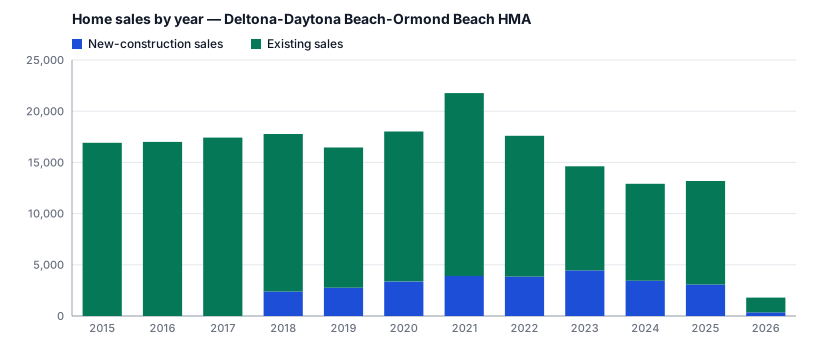
The Deltona-Daytona Beach-Ormond Beach, FL metropolitan area experienced a fluctuating pattern in resale home sales from 2010 through 2019. The period began with a gradual recovery from the Great Recession, as evidenced by the increase in home sales from 15,045 in 2013 to 16,998 in 2016. This upward trend continued, reaching a peak of 17,422 home sales in 2017. However, the market saw a decline in 2018, with sales dropping to 15,382, followed by a further decrease to 13,694 in 2019. This period was characterized by a mix of economic recovery and market adjustments, reflecting broader trends in the housing market during the post-recession era.
The years 2020 and 2021 marked a significant boom in the resale home market in the metropolitan area, driven by historically low mortgage interest rates. In 2020, home sales increased to 14,642, and this upward momentum continued into 2021, when sales reached a peak of 17,864. This surge was part of a nationwide trend where lower borrowing costs and increased demand for housing led to heightened activity in the real estate market. The peak in 2021 represented the highest level of resale home sales in the metropolitan area during the past decade.
Following the peak in 2021, the resale home market in the Deltona-Daytona Beach-Ormond Beach, FL metropolitan area experienced a notable slowdown. In 2022, home sales declined to 13,746, a decrease of 23.1 percent from the previous year. The trend continued into 2023, with sales further dropping to 10,170, down from 13,746 in 2022. This represents a 26.0 percent decrease year-over-year. The slowdown in sales can be attributed to rising mortgage interest rates, which have tempered demand and contributed to a more challenging environment for homebuyers. The forecast for 2024 anticipates a slight decline in sales to 9,459, indicating continued market adjustments in response to the prevailing economic conditions.
New Home Sales
The Deltona-Daytona Beach-Ormond Beach, FL metropolitan area experienced a steady increase in new home sales from 2018 through 2019. In 2018, there were 2,396 new home sales, which rose to 2,761 in 2019. This represents an increase of 365 homes, or 15.2 percent. This growth period reflects a strengthening housing market in the metropolitan area, driven by factors such as population growth and economic expansion.
The pandemic era from 2020 to 2022 saw a significant surge in new home sales in the metropolitan area. In 2020, new home sales increased to 3,374, up from 2,761 in 2019, marking a 22.2 percent rise. The upward trend continued in 2021, with sales reaching 3,902, the peak year for new home sales during this period. Although there was a slight decline in 2022 to 3,852 sales, the level remained elevated compared to pre-pandemic years. This surge can be attributed to increased demand for housing as remote work became more prevalent and interest rates remained low.
In 2023, new home sales in the Deltona-Daytona Beach-Ormond Beach, FL metropolitan area rose to 4,454, up from 3,852 in 2022, representing an increase of 602 homes, or 15.6 percent. However, the trajectory shifted in 2024, with sales declining to 3,454, a decrease of 1,000 homes, or 22.5 percent, from the previous year. The downward trend continued into 2025, with sales further decreasing to 3,075, down by 379 homes, or 11.0 percent, from 2024. During the first two months of 2026, there were 354 new home sales, indicating a continued slowdown in the market. This recent decline may reflect changing economic conditions, including rising interest rates and a potential cooling of the housing market following the pandemic-era surge.
Home-sales totals — Deltona-Daytona Beach-Ormond Beach HMA, annual
| Year | New-construction sales | Existing sales | Total |
|---|---|---|---|
| 2014 | — | 15,480 | 15,480 |
| 2015 | — | 16,916 | 16,916 |
| 2016 | — | 16,998 | 16,998 |
| 2017 | — | 17,422 | 17,422 |
| 2018 | 2,396 | 15,382 | 17,778 |
| 2019 | 2,761 | 13,694 | 16,455 |
| 2020 | 3,374 | 14,642 | 18,016 |
| 2021 | 3,902 | 17,864 | 21,766 |
| 2022 | 3,852 | 13,746 | 17,598 |
| 2023 | 4,454 | 10,170 | 14,624 |
| 2024 | 3,454 | 9,459 | 12,913 |
| 2025 | 3,075 | 10,106 | 13,181 |
| 2026 | 354 | 1,441 | 1,795 |
Resale Home Sales Prices
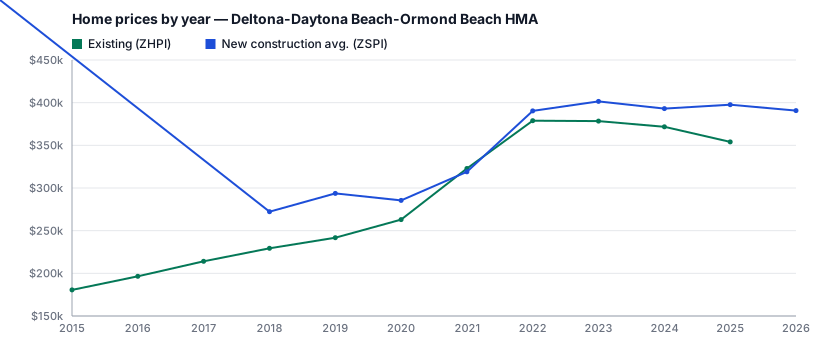
The Deltona-Daytona Beach-Ormond Beach, FL metropolitan area experienced a significant increase in resale home prices from 2020 to 2022. In 2020, the average resale home price was $262,914.59, which marked a substantial rise from the previous year. By 2021, the average price had surged to $322,816.64, representing a 22.8 percent increase from 2020. The upward trend continued into 2022, with the average resale home price reaching $378,837.67, up from $322,816.64 in 2021, reflecting a 17.3 percent increase. This period of rapid price escalation was indicative of heightened demand and constrained supply in the housing market.
In 2023, the resale home prices in the metropolitan area began to moderate. The average price for 2023 was $378,383.25, slightly down from $378,837.67 in 2022, indicating a marginal decrease. This moderation continued into 2024, with the average price declining to $371,701.03. The trend suggests a stabilization in the market following the rapid increases observed in the previous years. By 2025, the average resale home price further decreased to $354,031.19, reflecting a continued adjustment in the market dynamics.
When compared to the pre-pandemic period, the recent trends in resale home prices show a departure from the typical annual growth rate. Prior to the pandemic, the average annual increase in resale home prices was approximately 5 to 6 percent. However, the period from 2020 to 2022 saw significantly higher growth rates, driven by unique market conditions during the pandemic. The subsequent moderation in prices from 2023 onward suggests a return to more sustainable growth patterns, aligning closer to historical norms. This adjustment reflects a recalibration of the housing market as it responds to changing economic conditions and consumer behaviors.
New Home Sales Prices
The Deltona-Daytona Beach-Ormond Beach, FL metropolitan area has experienced significant fluctuations in new home prices over the past decade. In 2018, the average price of a new home was $272,267. By 2019, this figure had increased to $293,638, marking a rise of 7.8 percent. However, in 2020, the average price decreased to $285,427, down from the previous year. The market saw a substantial increase in 2021, with the average price reaching $318,960, representing an 11.7 percent increase from 2020. This upward trend continued into 2022, with the average price climbing to $390,309, a notable 22.4 percent increase from 2021. The year 2023 saw a further increase to $401,481, although the pace of growth slowed to 2.9 percent.
In the most recent two-year period, the trajectory of new home prices in the metropolitan area has shown a slight decline. The average price in 2024 was $393,048, down 2.1 percent from 2023. This trend continued into 2025, with the average price slightly increasing to $397,653, up 1.2 percent from 2024. However, the first two months of 2026 indicate a decrease, with the average price at $390,722. This represents a 1.7 percent decline from the annual average of 2025. The recent flattening and slight decrease in prices may be attributed to a combination of factors, including potential builder incentives aimed at stimulating sales and a shift in the mix of homes being sold, possibly favoring more affordable options. These dynamics suggest a market adjusting to changing economic conditions and consumer preferences.
Average sale price — Deltona-Daytona Beach-Ormond Beach HMA, annual
| Year | New-construction average | Existing (year-end) |
|---|---|---|
| 2018 | $272,267 | $229,381 |
| 2019 | $293,638 | $241,713 |
| 2020 | $285,427 | $262,915 |
| 2021 | $318,960 | $322,817 |
| 2022 | $390,309 | $378,838 |
| 2023 | $401,481 | $378,383 |
| 2024 | $393,048 | $371,701 |
| 2025 | $397,653 | $354,031 |
| 2026 | $390,722 | — |
Affordability
The affordability of home sales in the Deltona-Daytona Beach-Ormond Beach, FL metropolitan area is influenced by the current price levels of existing homes. The average price of an existing home is approximately $355,189, which represents a decrease of 3.7 percent from the previous year. Although the specific mortgage rate is not provided, prevailing rates have generally been higher than in recent years, which could imply a significant monthly cost for potential homebuyers. The decline in existing home prices may offer some relief to buyers, but the overall affordability remains challenged by the broader economic conditions.
In the state of Florida, several factors contribute to the affordability challenges faced by homeowners. Rising homeowners-insurance premiums have been a significant concern, driven by increased risks associated with natural disasters and regulatory changes. Additionally, homeowners' association (HOA) and community development district (CDD) fees can add to the financial burden of owning a home in the area. Property taxes, which are influenced by assessed home values and local government budgets, also play a role in the overall cost of homeownership. These factors collectively impact the affordability landscape for residents in the metropolitan area.
First-time homebuyers in the Deltona-Daytona Beach-Ormond Beach area may find it particularly challenging to enter the housing market under current conditions. The combination of high home prices and additional costs such as insurance and taxes can be prohibitive for those without significant savings or financial assistance. However, if mortgage rates were to ease during the forecast period, it could provide some relief and potentially increase the accessibility of homeownership for first-time buyers. A reduction in rates would lower monthly mortgage payments, making it easier for new buyers to afford homes in the area.
Distressed Sales and Delinquent Mortgages
During the years following the Great Recession, from 2010 to 2013, distressed sales in the nation were notably high as the housing market struggled to recover. Over the course of the 2010s, these sales gradually declined as the economy improved and housing market conditions stabilized. The period from 2020 to 2022 saw a trough in distressed sales, largely due to pandemic-related forbearance measures that provided temporary relief to homeowners. Since 2023, there has been a modest uptick in distressed sales as these forbearance measures have expired and the market adjusts to post-pandemic conditions.
In the Deltona-Daytona Beach-Ormond Beach, FL metropolitan area, the mortgage-delinquency rate is likely near historic lows. This stability is largely attributed to the accumulated home-price equity that has constrained any significant rise in delinquencies. Although specific MSA-level delinquency data is not currently integrated, the broader trends suggest that the area benefits from the same factors that have kept national delinquency rates low. The accumulated equity provides a buffer for homeowners, reducing the likelihood of defaults even as market conditions evolve.
Geographic Submarkets
The Deltona-Daytona Beach-Ormond Beach, FL Housing Market Area (HMA) is characterized by a diverse range of geographic submarkets, each with distinct housing market dynamics. The core principal city of Deltona-Daytona Beach-Ormond Beach serves as the economic and cultural hub, typically offering a mix of housing options that cater to a wide demographic. Coastal submarkets within the HMA are likely to feature higher price levels due to their desirable locations and amenities, attracting both retirees and second-home buyers. These areas often have a higher concentration of luxury and vacation properties. In contrast, inland and exurban submarkets may offer more affordable housing options, appealing to first-time homebuyers and those seeking larger lots or more rural settings.
Looking ahead, the differentiation among submarkets within the HMA is expected to continue, influenced by factors such as land availability and market demand. Submarkets with more developable land are likely to absorb a greater share of new construction activity, potentially moderating price increases in those areas. Conversely, established coastal submarkets, with limited land for new development, are anticipated to experience stronger price appreciation due to their inherent desirability and limited supply. This dynamic may lead to increased competition for existing homes in these coastal areas, further driving up prices.
The "Location Fundamentals" section of this report will provide a more detailed analysis of individual submarkets within the HMA, examining factors such as crime rates, school quality, natural hazards, and accessibility. These elements play a crucial role in shaping the attractiveness and livability of each submarket, influencing both buyer preferences and long-term housing market trends. Understanding these fundamentals will offer valuable insights into the potential growth and development patterns across the Deltona-Daytona Beach-Ormond Beach HMA during the forecast period.
Homebuyer Profile
The Deltona-Daytona Beach-Ormond Beach, FL metropolitan area is characterized by a homebuyer profile typical of many sunbelt metros, particularly those with an aging population. This region attracts a significant number of retirees seeking a warmer climate and a more relaxed lifestyle. Additionally, move-down buyers from higher-cost metropolitan areas are drawn to the region's relatively lower cost of living. Families returning to the area for its favorable climate and economic opportunities also contribute to the demand for housing. These demographic trends have shaped the housing market, with a notable presence of older homebuyers and those seeking to downsize or relocate for lifestyle reasons.
In the Deltona-Daytona Beach-Ormond Beach metropolitan area, the share of cash buyers is typically elevated compared to other regions. This trend is common in markets with a significant retiree population, as many buyers in this demographic prefer to purchase homes outright, avoiding the complexities of mortgage financing. The prevalence of cash transactions can insulate the housing market from fluctuations in mortgage interest rates, as these buyers are less sensitive to changes in borrowing costs. Consequently, the local housing market may experience more stability in the face of national mortgage rate volatility, as a substantial portion of transactions are not directly impacted by these changes.
Given the composition of the housing market in the Deltona-Daytona Beach-Ormond Beach area, the share of Federal Housing Administration (FHA) and Department of Veterans Affairs (VA) loans may be lower than in other regions. The presence of a significant number of cash buyers and retirees, who often have substantial equity from previous home sales, reduces the reliance on government-backed loan programs. However, these programs remain an important option for younger families and first-time homebuyers who are entering the market and may not have the same level of financial resources as older, more established buyers. The availability of FHA and VA loans can provide critical support for these segments of the population, ensuring a diverse range of homebuyers can access the housing market.
Sales Construction
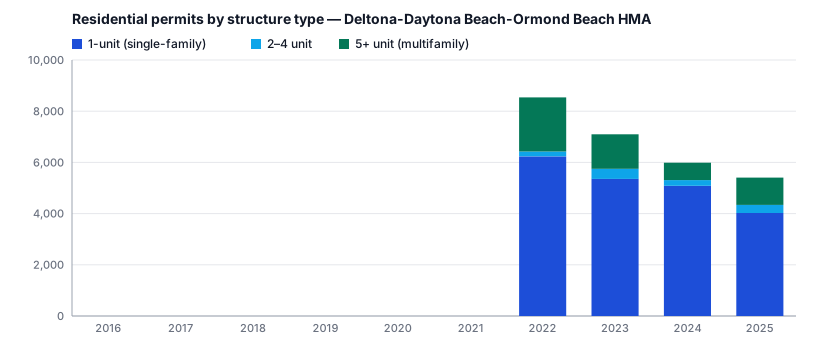
During the early 2010s, the pace of residential construction in the Deltona-Daytona Beach-Ormond Beach, FL metropolitan area was notably subdued. From 2016 through 2021, there were no recorded permits for single-family homes, duplexes, triplexes, quadplexes, or multifamily units with five or more units. This lack of construction activity suggests a period of stagnation in the housing market, potentially influenced by broader economic conditions or local market dynamics that did not favor new residential development.
The period from 2020 to 2022 marked a significant shift in the housing market of the metropolitan area, characterized by a surge in residential construction permitting. In 2022, permits were issued for 6,236 single-family homes, 188 units in duplexes, triplexes, and quadplexes, and 2,115 units in multifamily buildings with five or more units. This increase in permitting activity reflects a post-pandemic pattern where demand for housing rose sharply, possibly driven by factors such as increased net in-migration, changes in housing preferences, and a favorable economic environment that supported new construction.
In the latest two years, the trend in residential construction permitting has shown signs of cooling. In 2023, permits for single-family homes decreased to 5,358, while permits for duplexes, triplexes, and quadplexes increased to 393 units. Multifamily permits with five or more units also declined to 1,346. By 2024, the number of single-family permits further decreased to 5,085, and multifamily permits with five or more units dropped to 681, although duplex, triplex, and quadplex permits rose slightly to 224. The decline in single-family and multifamily permitting may be attributed to factors such as rising construction costs, changes in interest rates, or a stabilization of the housing demand following the initial post-pandemic surge.
Annual sales permitting — Deltona-Daytona Beach-Ormond Beach HMA
| Year | SF + townhome | 2-4 units | Total sales permits |
|---|---|---|---|
| 2022 | 6,236 | 188 | 6,424 |
| 2023 | 5,358 | 393 | 5,751 |
| 2024 | 5,085 | 224 | 5,309 |
| 2025 | 4,023 | 317 | 4,340 |
Source: U.S. Census Bureau Building Permits Survey, full-year county files.
Forecast
The Deltona-Daytona Beach-Ormond Beach, FL metropolitan area is projected to experience a demand for 17,610 home sales during the next three years. This demand reflects the ongoing growth and development within the region, driven by factors such as population growth and economic expansion. The current level of residential construction activity, with 3,666 units under construction, will contribute to meeting a portion of this demand. The availability of these new homes is expected to alleviate some pressure on the housing market, providing potential homebuyers with more options.
The housing market in the metropolitan area has been characterized by a steady increase in demand, supported by favorable economic conditions and demographic trends. The construction of new homes is a critical component in addressing the housing needs of the region, as it helps to balance supply and demand dynamics. The 3,666 units currently under construction represent a significant investment in the local housing stock, which will play a crucial role in accommodating the projected demand over the forecast period.
As the metropolitan area continues to grow, the demand for housing is anticipated to remain robust. The influx of new residents, coupled with a strong local economy, is likely to sustain the demand for home sales. The ongoing construction activity is a positive indicator of the region's ability to respond to this demand, ensuring that the housing market remains vibrant and competitive. The successful completion of these units will be essential in maintaining market stability and supporting continued economic growth.
The forecasted demand for 17,610 home sales over the next three years underscores the importance of strategic planning and investment in the housing sector. The metropolitan area is well-positioned to capitalize on its growth potential, with the current construction pipeline serving as a foundation for future development. As new homes become available, they will provide much-needed relief to the housing market, helping to accommodate the needs of both current and prospective residents.
In conclusion, the Deltona-Daytona Beach-Ormond Beach, FL metropolitan area is poised for continued growth in the housing market, with a projected demand for 17,610 home sales over the next three years. The 3,666 units under construction will play a vital role in meeting this demand, contributing to the overall health and stability of the housing market. As the region continues to evolve, the ongoing development of new housing will be essential in supporting its economic and demographic expansion.
Table 6. Demand for New Sales Units — Deltona-Daytona Beach-Ormond Beach HMA, 3-Year Forecast
| Sales Units | |
|---|---|
| Demand | 17,610 |
| Under Construction | 3,666 |
Rental Market
Current Conditions and Historic Trends
The rental housing market in the Deltona-Daytona Beach-Ormond Beach, FL metropolitan area is currently slightly soft. As of February 2026, the apartment vacancy rate is 7.82 percent, up from 7.46 percent a year earlier, reflecting a year-over-year increase of 0.36 percentage points. This increase in vacancy rates suggests a loosening in the rental market conditions compared to the previous year.
The average rent in the metropolitan area is $1,380, representing a decrease of 3.46 percent from the previous year. Over the past three years, the average rent has shown a downward trajectory, with notable declines observed since early 2023. In March 2023, the average rent was $1,514, and it has steadily decreased each month, reaching $1,380 by February 2026. This trend indicates a softening in rental prices, likely influenced by increased vacancy rates and possibly a higher supply of rental units.
Historically, the rental market in the Deltona-Daytona Beach-Ormond Beach area experienced tightening conditions from 2010 through 2021. During this period, vacancy rates generally declined, and rental prices increased as demand outpaced supply. However, beginning in 2022, the market began to soften, coinciding with a post-pandemic surge in housing deliveries that eased market pressures. This shift has contributed to the current slightly soft market conditions, with increased vacancy rates and declining rental prices.
The vacancy rate data reveals specific inflection points over the past few years. Notably, the vacancy rate increased from 6.05 percent in March 2023 to 7.82 percent in February 2026. A significant rise occurred between May 2025 and July 2025, when the vacancy rate increased from 7.76 percent to 8.25 percent, indicating a period of rapid market softening. This trend suggests that the supply of rental units may have outpaced demand during this time, contributing to the current market conditions.
Table 7. Rental and Apartment Quick Facts — Deltona-Daytona Beach-Ormond Beach HMA
| Value | YoY Δ | |
|---|---|---|
| Overall rental vacancy rate | 7.8% | +0.4 pp |
| Average rent (all units) | $1,380 | -3.5% |
Rental Construction
During the early 2010s, the Deltona-Daytona Beach-Ormond Beach, FL metropolitan area experienced subdued levels of multifamily permitting activity. This period followed the Great Recession, which had a significant impact on housing markets nationwide. The metropolitan area saw no multifamily units permitted in structures with five or more units from 2016 through 2021. This lack of activity was indicative of a broader trend of cautious development in the aftermath of economic uncertainty, as developers and investors remained wary of overextending in a recovering market.
The multifamily permitting cycle in the metropolitan area began to show signs of recovery in 2022, with a notable increase in activity. In 2022, there were 2,115 multifamily units permitted, marking the peak year for such activity in recent years. This resurgence in permitting was likely influenced by a combination of factors, including increased demand for rental housing and a more favorable economic environment. However, the years 2020 and 2021 were marked by labor and material constraints, which posed challenges to construction activities. These constraints were a result of disruptions in supply chains and workforce availability, which were prevalent issues during the height of the COVID-19 pandemic.
In the most recent years, the metropolitan area has experienced a cooling in multifamily permitting activity. In 2023, the number of units permitted in structures with five or more units decreased to 1,346, down from the peak in 2022. This trend continued into 2024, with only 681 units permitted. The decline in permitting activity can be attributed to rising vacancy rates, which have tempered the demand for new rental construction. As the market adjusts to these changing conditions, developers are likely exercising caution in response to the increased availability of rental units and the potential for oversupply. Looking ahead to 2025, there is a slight uptick in permitting activity, with 1,066 units expected, suggesting a potential stabilization in the market as developers respond to evolving demand dynamics.
Annual rental permitting — Deltona-Daytona Beach-Ormond Beach HMA
| Year | 5+ unit rental permits |
|---|---|
| 2022 | 2,115 |
| 2023 | 1,346 |
| 2024 | 681 |
| 2025 | 1,066 |
Source: U.S. Census Bureau Building Permits Survey, full-year county files.
Recent Apartment Developments
- Drift — Located in Daytona Beach, Drift offers 300 units with one- to three-bedroom options, and rents starting at $1699.
- 400 Beach — Situated in downtown Daytona Beach, 400 Beach is under construction with 296 units in a six-story development.
- Eloah Estates — Planned in Deltona, Eloah Estates will feature 536 units, though it is not yet completed.
- Tuscan Reserve Apartments — Located in Palm Coast, Tuscan Reserve Apartments opened with 107 units offering one- to three-bedroom options, with rents starting at $1700.
- Eden Crystal Lake — In Port Orange, Eden Crystal Lake recently opened with 288 units, offering one- to three-bedroom apartments with rents at $1600, $1950, and $2400 respectively.
Rent Burden and Affordability
The average rent in the Deltona-Daytona Beach-Ormond Beach, FL metropolitan area is approximately $1,380. To remain under the HUD 30-percent rent-to-income threshold, a household would need a monthly gross income of about $4,600, or $55,212 annually. Given the economic profile of the area, a significant portion of households may not meet this income requirement, potentially leading to a higher incidence of rent burden. The affordability challenge is particularly pronounced for lower-income households, who may find it difficult to allocate such a substantial portion of their income to housing costs.
The recent decline in average rent by 3.46 percent over the past year suggests some easing in rental cost pressures. However, the interplay between rent levels, vacancy rates, and local wage growth remains complex. In a metropolitan area heavily influenced by tourism, many renter households may still experience rent burden despite the decrease in average rent. The tourism sector often provides jobs that are lower-wage, which can exacerbate affordability issues for workers in these industries, especially if wage growth does not keep pace with housing costs.
Rental subsidies play a crucial role in alleviating rent burden for low-income households in the metropolitan area. Programs such as Housing Choice Vouchers, Low-Income Housing Tax Credits (LIHTC), and USDA Section 515 rural rental housing assistance provide essential support. These programs help to moderate the impact of high rental costs by reducing the effective rent paid by eligible households. The availability and accessibility of such subsidies are vital in ensuring that low-income families can secure affordable housing and avoid severe rent burden.
Rental Submarkets
The rental market in the Deltona-Daytona Beach-Ormond Beach metropolitan area exhibits a typical pattern where coastal and core-city submarkets tend to have higher rents compared to their interior and exurban counterparts. The principal city of Deltona-Daytona Beach-Ormond Beach, being a coastal area, generally commands higher rental prices due to its desirable location and amenities. In contrast, the more interior and exurban submarkets often experience lower rental rates, which can be attributed to their distance from the coast and urban centers. These areas also tend to have higher vacancy rates, as the demand for rental units is typically lower than in the more centrally located and coastal submarkets.
In recent years, new multifamily supply in the Deltona-Daytona Beach-Ormond Beach metropolitan area has been concentrated primarily in the coastal and core-city submarkets. This influx of new construction has contributed to a stabilization of vacancy rates in these areas, as the increased supply has been met with strong demand. The addition of new units has helped to accommodate the growing population and the influx of residents seeking rental housing in desirable locations. As a result, vacancy rates in these submarkets have remained relatively stable, even as new developments have come online.
Looking ahead, the outlook for the rental market in the Deltona-Daytona Beach-Ormond Beach metropolitan area over the next 18 to 24 months is expected to remain positive. Continued demand for rental housing in coastal and core-city submarkets is likely to support stable rent growth and maintain relatively low vacancy rates. The ongoing development of new multifamily units in these areas will help to meet the demand and provide additional housing options for residents. However, interior and exurban submarkets may continue to experience higher vacancy rates and slower rent growth, as demand remains concentrated in more desirable coastal locations.
HUD Fair Market Rents Context
Fair Market Rents (FMRs) are set at the 40th percentile of gross rents for standard-quality units and are used primarily in the Housing Choice Voucher program to determine payment standards. For the fiscal year 2026, the FMRs in the Deltona-Daytona Beach-Ormond Beach, FL metropolitan area are $1,278 for a studio, $1,433 for a one-bedroom unit, $1,806 for a two-bedroom unit, $2,241 for a three-bedroom unit, and $2,797 for a four-bedroom unit. These FMRs provide a benchmark against which the current average market-rate rent of $1,380 in the metropolitan area can be compared. The FMR for a one-bedroom unit is slightly above the current average rent, indicating that the FMRs are generally aligned with the prevailing market conditions for smaller units.
For affordable housing providers and voucher recipients, the alignment of FMRs with current market rents is crucial. The FMRs for fiscal year 2026 suggest that the payment standards are keeping pace with the observed market rent growth in the metropolitan area. However, the FMR for a two-bedroom unit is significantly higher than the current average rent, which may indicate a potential gap for larger units during the forecast period. This discrepancy could impact the affordability and accessibility of housing for voucher holders, particularly those seeking larger accommodations. As the market continues to evolve, it will be important for FMRs to adjust accordingly to ensure that they remain a viable tool for supporting low-income households in securing adequate housing.
HUD Fair Market Rents (FY2026) — Deltona-Daytona Beach-Ormond Beach HMA
| Bedrooms | FY2026 FMR | Current market rent |
|---|---|---|
| Studio (0 BR) | $1,278 | — |
| 1 BR | $1,433 | — |
| 2 BR | $1,806 | — |
| 3 BR | $2,241 | — |
| 4 BR | $2,797 | — |
HUD Fair Market Rents are used for the Housing Choice Voucher program and as benchmarks for other HUD programs. They reflect the 40th percentile of gross rents for standard-quality rental units.
Forecast
The Deltona-Daytona Beach-Ormond Beach, FL metropolitan area is projected to require approximately 8,287 additional rental units during the next three years. This demand reflects the ongoing need for rental housing in the region, driven by factors such as population growth and economic conditions. The current pipeline includes 844 units under construction, which will contribute to meeting this demand. However, the total number of units under construction, combined with any existing excess vacant inventory, suggests that additional construction beyond these projects is not needed. Further development could lead to an oversupply in the market, resulting in a softening of rental conditions.
The demand for rental housing in the metropolitan area is influenced by several factors, including employment trends and demographic shifts. The region has experienced steady population growth, which has contributed to increased demand for rental units. Additionally, the economic recovery in the area has supported job creation, particularly in the service-providing sectors, further bolstering the need for rental housing. As the local economy continues to expand, the demand for rental units is expected to remain strong throughout the forecast period.
Despite the positive outlook for rental demand, the potential for oversupply remains a concern. The construction of new rental units must be carefully managed to avoid exacerbating vacancy rates and putting downward pressure on rental prices. Developers and policymakers should monitor market conditions closely to ensure that the supply of rental housing aligns with demand. This approach will help maintain a balanced rental market and support the long-term stability of the housing sector in the metropolitan area.
The rental market in the Deltona-Daytona Beach-Ormond Beach, FL metropolitan area has shown resilience in recent years, with steady demand for rental units. The forecasted demand of 8,287 units over the next three years underscores the importance of strategic planning in the housing sector. By aligning new construction with demand, the region can avoid the pitfalls of oversupply and maintain a healthy rental market. This balance is crucial for supporting both renters and property owners in the area.
In conclusion, the Deltona-Daytona Beach-Ormond Beach, FL metropolitan area is poised for continued growth in rental demand over the next three years. With 844 units currently under construction, the region is on track to meet a significant portion of this demand. However, caution is advised to prevent overbuilding, which could lead to a softening of rental market conditions. By carefully managing the supply of rental housing, the metropolitan area can ensure a stable and prosperous future for its residents and the housing market as a whole.
Table 8. Demand for New Rental Units — Deltona-Daytona Beach-Ormond Beach HMA, 3-Year Forecast
| Rental Units | |
|---|---|
| Demand | 8,287 |
| Under Construction | 844 |
Location Fundamentals
The standard HUD HMP sections above describe the metropolitan area's housing market itself. This section characterizes the underlying drivers of price formation — safety, schools, natural-hazard exposure, infrastructure, policy, and demographic tailwinds — from Zoomprop's proprietary thematic layers. These signals are the most-replicated non-housing inputs in the hedonic-pricing literature.
The Deltona-Daytona Beach-Ormond Beach metropolitan area has experienced significant demographic and economic changes as of February 2026. The population growth rate over the past three years is 7.7 percent, which is likely to contribute to increased demand for housing and upward pressure on home prices. The area also saw a substantial increase in income levels, with a 38 percent growth over the same period, potentially enhancing the purchasing power of residents and further supporting home price appreciation. The median school rating in the area is 5.00, which may have a neutral effect on housing demand, as it indicates average educational quality. However, the region's vulnerability to hurricanes, with a top peril score of 88.11, could pose a risk to property values and insurance costs. Additionally, the average walk score of 38.8 suggests limited walkability, which may affect the desirability of certain neighborhoods for potential homebuyers.
Safety
- Across the Deltona-Daytona Beach-Ormond Beach metropolitan area, Zoomprop aggregated 1,888 reported incidents over the most recent six months and 338 in the last 30 days.
| Crime type | Last 30 days | Last 6 months |
|---|---|---|
| arrest | 197 | 1,027 |
| theft | 48 | 244 |
| assault | 20 | 116 |
| vandalism | 6 | 52 |
| burglary | 8 | 44 |
- Most recent FBI UCR data for the state (2025) shows a violent-crime offense rate of 12.9 per 100,000 residents and a property-crime offense rate of 66.4 per 100,000 residents.
Source: FBI Uniform Crime Reporting (UCR), state-level, latest full year available.
Schools
- 74 K-12 schools operate within the MSA (5 with GreatSchools ratings).
- Median GreatSchools rating is 5.0 out of 10; 1 schools score 8 or higher and 0 score 3 or lower.
- Average high-school graduation rate is 94.0 percent.
- Average student-to-teacher ratio is 16.4 to 1.
- Average share of students classified as low-income across schools in the MSA is 68.3 percent.
Top-rated schools in the Deltona-Daytona Beach-Ormond Beach metropolitan area
| School | City | District | GreatSchools | Grad. rate |
|---|---|---|---|---|
| Chisholm Elementary School | New Smyrna Beach | Volusia | 9.0 | — |
| Champion Elementary School | Daytona Beach | Volusia | 6.0 | — |
| Atlantic High School | Port Orange | Volusia | 5.0 | 94.0% |
| Campbell Middle School | Daytona Beach | Volusia | 4.0 | — |
| Blue Lake Elementary School | Deland | Volusia | 4.0 | — |
Natural-hazard exposure (FEMA National Risk Index)
- Of 152 census tracts in the MSA, 84 (55%) rated Relatively Moderate; 39 (26%) rated Relatively High; 28 (18%) rated Relatively Low; 1 (1%) rated Very High.
- Leading perils by average FEMA NRI risk score across the MSA's tracts: Hurricane (score 88.1); Lightning (score 87.2); Tornado (score 71.5); Riverine Flood (score 64.3); Cold Wave (score 62.0).
- The MSA's tracts average a social-vulnerability index of 51.8 and a community-resilience score of 33.1 (both on FEMA's 0-100 scale).
Source: FEMA National Risk Index, mapped to census tracts and rolled up to the MSA. Flood and wildfire capitalization into home prices is well-documented post-2017 disclosure (Bin & Polasky 2004; Keys & Mulder 2024).
Accessibility & infrastructure
- Across 21 neighborhoods measured, the Deltona-Daytona Beach-Ormond Beach metropolitan area has an average Walk Score of 38.8 and an average Bike Score of 47.9.
- 3 neighborhoods score above 70 on Walk Score ("very walkable"); 16 score below 50 ("car-dependent").
- The MSA is served by 3,242 public-transit stops operated by 2 transit agencies across 13 neighborhoods.
Demographic tailwinds
- Population-weighted median household income across the MSA is $64,961.
- Three-year median-income growth averages 38.0 percent.
- Three-year population growth averages 7.7 percent.
- Average neighborhood-level unemployment rate (ACS-derived) is 3.5 percent.
- Average ACS-reported median gross rent is $1,335.
- Average ACS-reported median owner-occupied home value is $264,819.
Terminology, Definitions, and Notes
A. Definitions
| Term | Definition |
|---|---|
| Apartment Vacancy Rate | Vacancy rate for market-rate and mixed market-rate / affordable general-occupancy apartment properties with five or more units. |
| Building Permits | Residential building permit counts do not necessarily reflect all residential building activity. Some units are constructed without a permit or are classified as commercial. Zoomprop does not apply analyst adjustments for these unpermitted units in this document. |
| CBSA | Core-Based Statistical Area — the Census Bureau's statistical geography comprising one or more counties anchored by an urban center of at least 10,000 population. Metropolitan Statistical Areas (MSAs) are CBSAs with an urban center of ≥50,000. |
| Demand (3-Year Forecast) | Estimated housing production needed to achieve a balanced market at the end of the forecast period, given current conditions, trend growth, losses, and frictional vacancy. The estimates do not account for units currently under construction or in the development pipeline. |
| Distressed Sales | Short sales and real estate owned (REO) sales. |
| Existing Home Sales | Includes resales, short sales, and REO sales. |
| Fair Market Rent (FMR) | HUD-published rents at the 40th percentile of gross rents for standard-quality units, used for the Housing Choice Voucher program and other HUD programs. |
| Forecast Period | 3 years from the as-of date. |
| Frictional Vacancy | A healthy baseline vacancy rate (≈2.5 %) that supports normal tenant turnover; added to net household growth when computing 3-year demand. |
| Home Sales | Includes single-family home, townhome, and condominium sales. |
| Homeownership Rate | Share of occupied housing units that are owner-occupied. |
| HUD Housing Choice Voucher | Federal tenant-based rental-assistance program that pays participating landlords the difference between 30 % of a qualifying tenant's income and the local Fair Market Rent. |
| LIHTC | Low-Income Housing Tax Credit — the federal program that subsidizes construction and rehabilitation of rent-restricted rental housing via tax credits. |
| Months of Inventory | Ratio of homes currently for sale to the monthly home-sale rate. Less than 3 months is a tight market; more than 7 months is soft. |
| Net Natural Decline | Resident deaths exceed resident births. |
| PEP | Census Bureau Population Estimates Program — annual midyear population estimates at national, state, metropolitan, county, and minor-civil-division level, between decennial censuses. |
| Rent Burden | Household spends more than 30 % of gross income on gross rent (HUD standard); "severely rent-burdened" is the 50 %+ threshold. |
| Rental Vacancy Rate | Includes apartments and other rental units such as single-family, multifamily, and mobile homes for rent. |
| Resales | Home closings that have no ties to either new home closings (builders), foreclosures, or short sales. |
| Seriously Delinquent Mortgages | Mortgages 90 or more days delinquent or in foreclosure. |
B. Data Lineage
- Employment & unemployment (Economic Conditions): U.S. Bureau of Labor Statistics — CES for payrolls by supersector, LAUS for unemployment at MSA/state/nation, QCEW (BLS/Florida Commerce equivalents) as a fallback where CES is suppressed at this metro.
- Population & households (Population and Households): U.S. Census Bureau Population Estimates (PEP V2025 flat files), 2020 decennial census base, American Community Survey 1- and 5-year data.
- Migration flows: U.S. Census Bureau ACS 5-year Metro-to-Metro Migration Flows.
- Home sales and prices (Home Sales Market): Zoomprop market data (metro home-price, sales-volume, and new-construction-price series); Freddie Mac (30-year fixed-rate mortgage); Zoomprop listing aggregates (months of inventory, days on market).
- Residential permits (Home Sales Market, Rental Market): U.S. Census Bureau Building Permits Survey — full-year county files aggregated to MSA.
- Rental market: Zoomprop rent and vacancy aggregates; unit-count series from Zoomprop; developer research via Tavily.
- Forecasts: Zoomprop trend projections over the most recent 5-year window of the underlying series, plus a 2.5 % frictional-vacancy adjustment for the housing-demand calculation.