
Executive Summary
Housing Market Area Description
The Oklahoma City metropolitan area is located in the central region of the state of Oklahoma. It encompasses seven counties: Canadian, Cleveland, Lincoln, Logan, Oklahoma, Grady, and McClain. The metropolitan area is the largest in the state and includes the state capital and principal city, Oklahoma City. It is bordered by several notable communities, including Edmond to the north, Midwest City to the east, Norman to the south, and El Reno to the west. The area is characterized by its expansive land area, which includes a mix of urban and rural environments, contributing to diverse commuting patterns within the region.
The economy of the Oklahoma City metropolitan area is driven by a variety of sectors, with a significant emphasis on the aviation industry and tourism. The presence of the Oklahoma State Capitol, a notable landmark, underscores the area's political and historical significance. The metropolitan area is also home to several universities and military installations, which contribute to its economic stability and growth. Tourism plays a vital role, with attractions such as the First Americans Museum and various cultural and historical sites drawing visitors from across the nation.
As of January 1, 2026, the population of the Oklahoma City metropolitan area is 1,512,813. This reflects the area's status as one of the fastest-growing regions in the country. A distinctive fact about the area is that the Oklahoma State Capitol once had an operational oil well on its grounds, highlighting the region's historical ties to the oil industry. This unique aspect of the area's history continues to be a point of interest for both residents and visitors alike.
Tools and Resources
- Find interim updates for this metropolitan area, and select geographies nationally, at PD&R's Market-at-a-Glance tool.
- Additional data for the HMA can be found in this report's supplemental tables and the
*.audit.jsonsidecar file written beside this markdown. - For information on HUD-supported activity in this area, see the Community Assessment Reporting Tool.
Market Qualifiers
Economy
The economy of the Oklahoma City, OK metropolitan area experienced a slight decline in nonfarm payrolls during the 12 months ending February 2026. The total number of nonfarm jobs decreased by 184, resulting in a 0.03 percent decline from the previous year. This reduction in employment indicates a minor contraction in the labor market. The unemployment rate increased to 3.3 percent, up from 3.1 percent a year earlier, suggesting a slight loosening in labor market conditions.
Despite the recent decrease in employment, the unemployment rate remains below the neutral benchmark of 4 to 5 percent, indicating that the labor market is still relatively tight. The current unemployment rate suggests that the metropolitan area continues to experience a competitive job market, although the slight increase in unemployment may signal emerging challenges. The labor market dynamics reflect broader economic conditions that may influence future employment trends.
The Oklahoma City metropolitan area has historically shown resilience in its labor market, with fluctuations often aligning with broader economic cycles. The recent decrease in nonfarm payrolls may be attributed to sector-specific challenges or broader economic factors affecting the region. However, the overall tightness of the labor market suggests that there is still demand for labor, albeit with some emerging slack.
During the 3-year forecast period, payrolls in the Oklahoma City metropolitan area are expected to increase at an average annual rate of 1.0 percent. This projection reflects a moderate recovery in employment levels, supported by anticipated economic growth and potential sectoral shifts. The forecast suggests a gradual strengthening of the labor market, with potential for increased job creation and reduced unemployment rates over the coming years.
Home Sales Market
The sales housing market in the metropolitan area is currently balanced. The average sales price for new homes is $364,071, down from $385,890, or 5.6 percent, during the 12 months ending October 2023. In contrast, the average sales price for existing homes is $265,327, up from $262,680, or 1.0 percent, during the same period. The mortgage interest rate context is not specified, but it is an important factor influencing market dynamics.
Total home sales in the metropolitan area reached 20,102, a decrease of 7.2 percent from the previous year. This decline in sales activity reflects broader trends in the housing market, where demand and supply are adjusting to current economic conditions. The months of inventory available for sale is approximately 5.2 months, indicating a balanced market where neither buyers nor sellers have a distinct advantage.
There are currently 5,449 homes under construction, which suggests a steady level of development activity in the region. This level of construction activity is crucial for meeting future housing demand and maintaining balanced market conditions. Over the next three years, demand is estimated for 24,860 new sales units, highlighting the need for continued development to accommodate population growth and household formation.
Rental Market
The apartment rental market in the metropolitan area is currently balanced. The vacancy rate stands at 7.0 percent, up from 5.7 percent a year ago. This increase in vacancy indicates a shift in the market dynamics over the past year. The average rent is $1,081, reflecting a slight decline of 0.18 percent from the previous year. This decrease in rent suggests a moderation in rental price pressures, potentially influenced by the increased vacancy rate.
The demand for rental units remains robust, with 11,699 units absorbed during the past year. This level of demand underscores the continued attractiveness of the metropolitan area for renters, despite the slight decline in average rent. The number of units currently under construction is 919, which is relatively modest compared to the demand. This level of construction activity suggests that the market is not at risk of oversupply in the near term.
During the forecast period, additional rental construction could help maintain the balance in the market. Given the current vacancy rate and the demand for rental units, a measured increase in construction would likely prevent any significant tightening of the market. However, developers should be cautious to align new construction with demand trends to avoid exacerbating the vacancy rate.
The rental market's current conditions reflect a stable environment for both renters and property owners. The slight decline in average rent may provide some relief to renters, while the balanced market conditions suggest that property owners can expect steady occupancy rates. As the metropolitan area continues to attract new residents, maintaining this balance will be crucial to ensuring a healthy rental market.
3-Year Housing Demand Forecast
| Line Item | Sales Units | Rental Units |
|---|---|---|
| Oklahoma City HMA Total Demand | 24,860 | 11,699 |
| Under Construction | 5,449 | 919 |
Total demand represents the estimated production necessary to achieve a balanced market at the end of the forecast period. The forecast period is from the as-of date to 3 years forward.
Notable Conditions and Recent Developments
The Oklahoma City, OK metropolitan area has experienced significant population growth, with the current population reaching 1,512,813 as of February 2026, up from 1,425,730 previously. This increase reflects a robust net in-migration trend, contributing to heightened demand for housing in the area. The growth in population underscores the need for additional housing units to accommodate new residents, which in turn supports both the sales and rental markets. As the population continues to expand, the demand for housing is expected to remain strong, influencing both the sales and rental sectors during the forecast period.
Sales and rental market conditions in the Oklahoma City metropolitan area are currently balanced. This equilibrium suggests that the supply of homes for sale and rental units is generally meeting the demand from buyers and renters. However, the dynamics within these markets can diverge due to various factors, such as differences in affordability and consumer preferences. For potential homebuyers, balanced conditions imply a stable market with moderate price appreciation, whereas renters may find a steady supply of available units, preventing significant rent increases. The balanced nature of both markets indicates a healthy housing environment, with opportunities for both buyers and renters to find suitable accommodations.
On the supply side, several factors are influencing the types of housing being developed in the Oklahoma City metropolitan area. Construction costs, which have been on the rise, pose a challenge for developers, potentially limiting the number of new housing units that can be built. Additionally, insurance costs and property taxes can impact the overall affordability of housing, affecting both developers and consumers. These factors can create headwinds for new construction, potentially constraining the supply of new homes and rental units. Policymakers and developers must navigate these challenges to ensure that the housing supply keeps pace with the growing demand.
The Oklahoma City metropolitan area is distinctive compared to its peers due to its diverse economic base and cultural attractions. The presence of a strong energy sector, along with a growing technology and aerospace industry, provides a stable economic foundation that supports housing demand. Additionally, the area's cultural and recreational amenities, including museums, parks, and a vibrant arts scene, enhance its appeal as a desirable place to live. These features contribute to the area's attractiveness, drawing new residents and supporting continued population growth.
Economic Conditions
Primary Local Economic Factors
The Oklahoma City metropolitan area is characterized by a diverse economic base with significant contributions from the government, trade, transportation and utilities, and education and health services sectors. The government sector is the largest employer, with notable institutions such as the State of Oklahoma and Tinker Air Force Base employing 37,600 and 26,000 individuals, respectively. The education and health services sector also plays a crucial role, with major employers including Oklahoma State University - Stillwater, the University of Oklahoma - Norman, and INTEGRIS Health. These institutions collectively employ over 36,000 people, highlighting the sector's importance to the local economy.
The metropolitan area is known for its aviation industry and tourism, contributing to its economic vitality. Oklahoma City, the principal city, is home to unique attractions such as the Oklahoma State Capitol, which historically had an operational oil well on its grounds. The area covers seven counties and has a population of approximately 1.4 million, making it the largest metropolitan area in the state of Oklahoma. The city's strategic location and infrastructure support its role as a hub for trade and transportation, further bolstering its economic profile.
Demographic and industry trends suggest both opportunities and challenges for the Oklahoma City metropolitan area. The presence of major educational institutions indicates a steady influx of students and young professionals, which can drive demand for housing and services. Additionally, the area's growing population supports the expansion of the education and health services sector. However, the reliance on government employment may pose risks if there are shifts in public sector funding or policy changes. The forecast period will likely see continued growth in sectors aligned with the area's strengths, such as aviation and healthcare, supported by net in-migration and a favorable business environment.
The leisure and hospitality sector, while smaller in comparison to others, remains a vital component of the local economy. With approximately 79,909 jobs, this sector benefits from the area's tourism appeal and cultural attractions. The Oklahoma City metropolitan area has been recognized as a top destination for young adults, which may further enhance its attractiveness as a place to live and work. As the area continues to develop, maintaining a balance between growth and sustainability will be essential to ensuring long-term economic stability.
Table 1. Major Employers in the Oklahoma City HMA
| Name of Employer | Nonfarm Payroll Sector | Approx. Employees |
|---|---|---|
| State of Oklahoma | Government | 37,600 |
| Tinker Air Force Base | Government | 26,000 |
| Oklahoma State University - Stillwater | Education & Health Services | 13,940 |
| University of Oklahoma - Norman | Education & Health Services | 11,530 |
| INTEGRIS Health | Education & Health Services | 11,000 |
Estimates via Zoomprop research (Tavily live search of local economic-development and state workforce sources). Excludes local school districts.
Current Conditions — Nonfarm Payrolls
During the 12 months ending February 2026, nonfarm payrolls in the Oklahoma City, OK metropolitan area totaled 710,500 jobs, a decrease of 184 jobs, or 0.03 percent, from the previous year. This slight decline indicates a deceleration in job growth compared with the previous 12 months. The overall employment landscape in the metropolitan area reflects a mixed performance across various sectors, with some areas experiencing growth while others faced reductions.
In the service-providing sectors, Education and Health Services led the gains, adding 3,800 jobs, an increase of 3.2 percent. This growth may be attributed to expansions in healthcare facilities and educational institutions within the metropolitan area. The Other Services sector also experienced an increase, with a gain of 400 jobs, or 1.4 percent. Financial Activities remained relatively stable, with a marginal increase of 5 jobs, or 0.01 percent. These sectors contributed positively to the overall employment landscape, offsetting some of the declines in other areas.
The goods-producing sectors experienced mixed results during the same period. The Construction sector added 200 jobs, representing a 0.5 percent increase, which may be linked to ongoing infrastructure projects and commercial developments in the metropolitan area. In contrast, the Manufacturing sector saw a reduction of 1,200 jobs, or 3.3 percent. This decline in manufacturing employment could be influenced by a slowdown in residential construction and other industry-specific factors affecting production and demand.
Among the sectors that experienced notable declines, the Government sector saw a reduction of 1,500 jobs, or 1.2 percent. This decrease may be due to budgetary constraints or restructuring efforts within local government entities. Additionally, the Mining and Logging sector experienced a decline of 400 jobs, or 3.5 percent, potentially reflecting fluctuations in commodity prices and reduced exploration activities. These declines highlight the challenges faced by certain sectors in maintaining employment levels amidst changing economic conditions.
Table 2. 12-Month Change in Nonfarm Payroll Jobs in the Oklahoma City HMA, by Sector
| Sector | Current (jobs) | Year Earlier (jobs) | Abs. Δ | % Δ |
|---|---|---|---|---|
| Total Nonfarm Payrolls | 710,491 | 710,675 | -184 | -0.0% |
| Mining & Logging | 10,045 | 10,408 | -363 | -3.5% |
| Construction | 35,073 | 34,900 | +173 | 0.5% |
| Manufacturing | 34,918 | 36,092 | -1,173 | -3.3% |
| Trade, Transportation & Utilities | 126,809 | 127,383 | -574 | -0.5% |
| Information | 6,445 | 6,433 | +12 | 0.2% |
| Financial Activities | 37,664 | 37,658 | +5 | 0.0% |
| Professional & Business Services | 93,791 | 94,350 | -559 | -0.6% |
| Education & Health Services | 122,591 | 118,817 | +3,774 | 3.2% |
| Leisure & Hospitality | 79,909 | 80,275 | -366 | -0.5% |
| Other Services | 31,000 | 30,567 | +433 | 1.4% |
| Government | 132,245 | 133,792 | -1,546 | -1.2% |
Source: U.S. Bureau of Labor Statistics (CES). Rows where CES is suppressed at this MSA are reconstructed from QCEW county-level annual data.
Annual nonfarm payrolls — Oklahoma City HMA, 10-year trend (annual average, thousands)
| Year | Total nonfarm (000s) | YoY Δ (000s) | YoY Δ % |
|---|---|---|---|
| 2016 | 629.8 | — | — |
| 2017 | 635.7 | +5.9 | 0.9% |
| 2018 | 649.4 | +13.7 | 2.2% |
| 2019 | 660.9 | +11.5 | 1.8% |
| 2020 | 631.8 | -29.1 | -4.4% |
| 2021 | 645.1 | +13.3 | 2.1% |
| 2022 | 672.4 | +27.2 | 4.2% |
| 2023 | 696.9 | +24.6 | 3.7% |
| 2024 | 708.9 | +12.0 | 1.7% |
| 2025 | 710.9 | +2.0 | 0.3% |
Source: U.S. Bureau of Labor Statistics (CES).
Sector Deep Dive — Government
The government sector in the Oklahoma City, OK metropolitan area currently employs approximately 132,245 individuals. This sector represents a significant portion of the total nonfarm employment in the region. Over the past 12 months, the government sector experienced a decline of 1,546 jobs, or 1.2 percent, down from 133,792 jobs during the previous year. This decrease reflects broader trends affecting government employment in the area.
Key employers within the government sector in the Oklahoma City metropolitan area include the State of Oklahoma and Tinker Air Force Base. The State of Oklahoma employs approximately 37,600 individuals, making it a major contributor to the sector's employment base. Tinker Air Force Base, another significant employer, provides jobs for about 26,000 people. These institutions play a crucial role in sustaining the local economy and providing stable employment opportunities.
The government sector in Oklahoma City is influenced by several qualitative drivers. The presence of Tinker Air Force Base underscores the importance of federal defense spending and military operations as a driver of employment in the region. Additionally, the State of Oklahoma's employment levels are impacted by state budget allocations and policy decisions, which can affect staffing levels and public sector initiatives. The sector's performance is also linked to demographic trends, such as population growth and urbanization, which can influence demand for public services and infrastructure.
Looking ahead, the government sector in the Oklahoma City metropolitan area is expected to face challenges and opportunities over the next three years. Potential changes in federal and state funding, as well as policy shifts, could impact employment levels. However, ongoing investments in infrastructure and public services may provide opportunities for growth. The sector's trajectory will likely be shaped by a combination of economic conditions, policy decisions, and demographic trends, which will influence the demand for government services and employment in the region.
Current Conditions — Unemployment
During the 12 months ending October 2023, the average unemployment rate in the Oklahoma City, OK metropolitan area was 3.3 percent, up from 3.1 percent during the previous 12-month period. This slight increase indicates a labor market that remains relatively balanced, with a modest rise in unemployment suggesting a stable economic environment. The labor market conditions in the metropolitan area reflect a slight tightening compared to the previous year, yet they remain favorable for job seekers.
The unemployment rate in the Oklahoma City metropolitan area is slightly lower than the state of Oklahoma's rate of 3.4 percent and significantly below the national average of 4.3 percent. This comparison highlights the relative strength of the local labor market, which continues to outperform broader state and national trends. The lower unemployment rate in the metropolitan area suggests a more robust economic environment, with potentially greater job opportunities and economic activity compared to the state and the nation.
Examining the longer-term trend, the unemployment rate in the Oklahoma City metropolitan area has experienced fluctuations over the past several years. The rate peaked at 6.2 percent in 2020, reflecting the economic disruptions caused by the COVID-19 pandemic. Since then, the unemployment rate has generally trended downward, reaching a notable low of 2.8 percent in 2022. The recent increase to 3.3 percent in 2023 suggests a stabilization in the labor market, following the significant recovery from the pandemic-induced peak. This trend indicates a resilient local economy that has managed to recover and maintain relatively low unemployment levels in recent years.
Annual average unemployment rate — Oklahoma City HMA
| Year | Unemployment rate |
|---|---|
| 2016 | 4.0% |
| 2017 | 3.6% |
| 2018 | 3.0% |
| 2019 | 2.9% |
| 2020 | 6.2% |
| 2021 | 3.8% |
| 2022 | 2.8% |
| 2023 | 3.0% |
| 2024 | 3.1% |
| 2025 | 3.2% |
Source: U.S. Bureau of Labor Statistics (LAUS).
Commuting Patterns and Labor Force Dynamics
The Oklahoma City, OK metropolitan area is centrally located in the interior of the United States, benefiting from a strategic position that is well-served by major interstate highways, including I-35, I-40, and I-44. These highways facilitate efficient commuting patterns within the metropolitan area and provide vital connections to adjacent regions. The presence of these transportation corridors supports a diverse range of commuting options for residents, contributing to the area's appeal as a residential and business hub. The metropolitan area's infrastructure supports a robust flow of goods and services, enhancing its economic vitality and attractiveness to both employers and employees.
Labor force dynamics in the Oklahoma City metropolitan area are influenced by several demographic factors. The area has a relatively young population compared to national averages, which supports a strong labor force participation rate. However, like many regions, it is also experiencing the effects of an aging population, with a growing number of retirees. This demographic shift may impact the availability of labor in certain sectors, particularly those that rely on experienced workers. Additionally, the metropolitan area does not have a significant seasonal workforce, as it is not heavily reliant on tourism, which provides stability in labor force participation throughout the year.
The shift toward remote and hybrid work arrangements during the COVID-19 pandemic has had a notable impact on commuting patterns in the Oklahoma City metropolitan area. The increased flexibility in work locations has led to changes in residential location preferences, with some workers opting to live further from traditional employment centers. This trend has implications for office-sector demand, as businesses reassess their space requirements in light of changing work habits. The potential for reduced demand for office space may lead to a reevaluation of commercial real estate strategies, while residential areas may experience shifts in demand as workers seek homes that accommodate remote work needs. The unemployment rate in the metropolitan area is currently 3.3 percent, indicating a relatively stable labor market as these changes continue to unfold.
Wages and Income
The Oklahoma City, OK metropolitan area is characterized by a diverse economy with significant employment in sectors such as leisure, retail, and healthcare. These sectors typically offer lower average wages compared to industries dominated by professional and financial services. As a result, the average wages in the metropolitan area are likely lower than those in regions with a higher concentration of high-paying industries. The presence of these service-providing sectors suggests a labor market that supports a substantial number of jobs, albeit with wages that may not keep pace with those in more specialized, higher-paying fields.
The rising cost of living in the Oklahoma City metropolitan area, driven by factors such as increasing home prices and property taxes, poses challenges for residents, particularly for middle-quintile renters. While nominal wage growth may occur, it often fails to match the pace of these rising expenses, leading to tighter real incomes. This dynamic can strain household budgets, as the cost of essential goods and services continues to climb, outpacing wage increases. Consequently, renters in the middle-income bracket may find it increasingly difficult to maintain their standard of living without adjusting their spending habits or seeking additional income sources.
Housing affordability remains a critical issue for existing residents of the Oklahoma City metropolitan area. As home prices rise, the gap between income levels and housing costs widens, making it more challenging for residents to afford homeownership or even rental housing. This affordability gap can lead to increased demand for affordable housing options and may necessitate policy interventions to ensure that housing remains accessible to a broad spectrum of the population. The interplay between wages, income, and housing costs is a crucial factor in shaping the economic well-being of the area's residents.
Economic Periods of Significance
2011 Through 2019
The Oklahoma City, OK metropolitan area experienced a significant period of economic expansion from 2011 to 2019. During this time, the nonfarm payrolls increased steadily, reflecting robust economic growth. In 2016, the nonfarm payrolls stood at 629,775 jobs, and by 2019, this figure had risen to 660,917 jobs. This represents an increase of 31,142 jobs over the three-year period, with an average annual growth rate of approximately 1.6 percent. The expansion was characterized by consistent job creation across various sectors, contributing to the overall economic vitality of the metropolitan area.
The service-providing sectors were the primary drivers of job growth during this period. These sectors typically include industries such as education and health services, professional and business services, and leisure and hospitality. The steady increase in employment within these sectors indicates a diversification of the local economy, reducing reliance on any single industry and enhancing economic resilience. The growth in these sectors likely reflects broader national trends, where service-oriented industries have become increasingly prominent in urban economies.
In addition to the service-providing sectors, the goods-producing sectors also contributed to the economic expansion in the Oklahoma City metropolitan area. These sectors, which include manufacturing, construction, and mining, experienced moderate growth, supporting the overall increase in nonfarm payrolls. The construction industry, in particular, may have benefited from increased demand for residential and commercial developments, driven by population growth and net in-migration to the area. This sectoral growth underscores the dynamic nature of the local economy during the expansion period.
The period from 2011 to 2019 marked the longest continuous expansion for the Oklahoma City metropolitan area in recent history. This sustained growth was facilitated by a combination of factors, including favorable economic conditions, strategic investments in key industries, and a supportive policy environment. The expansion not only bolstered employment levels but also contributed to rising incomes and improved living standards for residents of the metropolitan area. As a result, the region was well-positioned to weather subsequent economic challenges, including those posed by the COVID-19 pandemic.
Overall, the pre-pandemic expansion in the Oklahoma City metropolitan area was characterized by a balanced and diversified economic growth trajectory. The increase in nonfarm payrolls during this period reflects the area's ability to attract and retain businesses and talent, fostering a vibrant and competitive economic landscape. The sustained job creation across multiple sectors highlights the resilience and adaptability of the local economy, setting a strong foundation for future growth and development.
2020
The Oklahoma City, OK metropolitan area experienced a significant contraction in nonfarm payrolls during the 2020 pandemic. The total number of nonfarm jobs decreased to 631,817, down from 660,917 in 2019, marking a decline of 29,100 jobs or 4.4 percent. This contraction was reflective of the broader economic impact of the COVID-19 pandemic, which led to widespread job losses across various sectors. The decline in employment was particularly pronounced in the leisure and hospitality sector, which faced severe disruptions due to restrictions on travel and gatherings. The wholesale and retail trade sectors also experienced notable job losses as consumer spending patterns shifted and many businesses faced temporary closures or reduced operations.
Despite the overall decline in employment, certain sectors within the metropolitan area demonstrated resilience or even growth during this period. The transportation and utilities sector, for instance, benefited from the increased reliance on e-commerce and home deliveries, which drove demand for logistics and distribution services. This sectoral reallocation highlights the uneven impact of the pandemic across different industries, with some sectors experiencing growth opportunities while others faced significant challenges. The recovery in nonfarm payrolls began in 2021, with employment levels rising to 645,133, an increase of 13,317 jobs or 2.1 percent from the previous year, as the metropolitan area began to recover from the initial economic shock of the pandemic.
2021 Through 2023
The period from 2021 to 2023 marked a significant recovery phase for the Oklahoma City, OK metropolitan area, following the economic disruptions of 2020. Nonfarm payrolls in the metropolitan area increased from an average of 645,133 jobs in 2021 to 696,942 jobs in 2023. This represents an average annual gain of approximately 25,904 jobs, or 4.0 percent, during this period. The recovery was characterized by robust growth across various sectors, with notable contributions from both the service-providing and goods-producing sectors.
The service-providing sectors played a pivotal role in the recovery of the Oklahoma City metropolitan area. These sectors experienced substantial job growth as businesses reopened and consumer demand rebounded. The professional and business services sector, in particular, saw significant expansion, driven by increased demand for professional, scientific, and technical services. Additionally, the leisure and hospitality sector, which had been severely impacted during the pandemic, showed strong recovery as restrictions eased and tourism activities resumed.
The goods-producing sectors also contributed to the economic recovery in the metropolitan area. Manufacturing and construction activities gained momentum, supported by increased investments and infrastructure projects. The construction sector benefited from both residential and commercial developments, reflecting a growing demand for housing and business spaces. This sectoral growth was further bolstered by favorable economic policies and incentives aimed at stimulating local investments and job creation.
During the 12 months ending December 2023, the Oklahoma City metropolitan area continued to experience positive economic trends. The recovery was supported by net in-migration, which contributed to a growing labor force and increased consumer spending. The metropolitan area’s strategic location and business-friendly environment attracted new businesses and facilitated the expansion of existing ones, further enhancing job opportunities and economic resilience.
The recovery period also saw significant developments in the healthcare and education sectors. These sectors expanded to meet the growing needs of the population, providing essential services and contributing to job creation. The healthcare sector, in particular, benefited from increased investments in medical facilities and services, addressing both immediate healthcare demands and long-term growth prospects.
Overall, the recovery from 2021 to 2023 was marked by a dynamic and resilient economic environment in the Oklahoma City metropolitan area. The combination of sectoral growth, strategic investments, and favorable demographic trends positioned the metropolitan area for continued economic expansion during the forecast period. As the area moves forward, maintaining this momentum will be crucial to sustaining long-term economic growth and development.
Forecast
The Oklahoma City, OK metropolitan area is expected to experience an annual growth rate of 1.9 percent in nonfarm payrolls over the next three years. This growth is anticipated to be driven primarily by expansions in the service-providing sectors, which have historically been a significant component of the local economy. The professional and business services sector, in particular, is likely to lead this growth, supported by ongoing investments in technology and innovation. Additionally, the education and health services sector is expected to contribute significantly, reflecting the area's commitment to improving healthcare infrastructure and educational facilities. The construction sector may also see moderate growth as infrastructure projects continue to develop, further supporting employment gains in the metropolitan area.
However, several factors may pose challenges to the economic forecast for the Oklahoma City metropolitan area. Elevated interest rates could potentially dampen consumer spending and business investment, which are critical drivers of economic growth. Additionally, demographic aging may slow labor force growth, as a larger proportion of the population transitions into retirement. The area may also experience a moderation in net in-migration, which has been a key factor in supporting population and economic growth in recent years. These elements could collectively act as drags on the forecast, potentially tempering the pace of economic expansion during the forecast period.
Population and Households
Population Trends
The population of the Oklahoma City, OK metropolitan area experienced steady growth from 2010 to 2020. During this decade, the population increased from 1,430,019 in 2020 to 1,434,349 in 2021, reflecting an average annual growth of approximately 43,435 people, or 3.0 percent. This period was characterized by consistent population gains, contributing to the overall expansion of the metropolitan area.
Following 2020, the population growth in the Oklahoma City metropolitan area continued, with a noticeable acceleration compared to the previous decade. From 2020 to 2025, the population increased from 1,430,019 to 1,512,813, marking an average annual addition of approximately 16,759 people. This represents an annual growth rate of about 1.2 percent, indicating a faster pace of growth than during the 2010s. The most recent annual increase, from 2024 to 2025, was 13,745 people, or 0.9 percent.
As of 2025, the population of the Oklahoma City metropolitan area is 1,512,813. Looking ahead, the population is projected to reach 1,564,161 by 2028. This trend extrapolation suggests an average annual increase of 17,116 people, or 1.1 percent. The forecast indicates continued robust growth, maintaining the momentum observed in recent years.
The growth in the Oklahoma City metropolitan area can be attributed to several factors, including net in-migration and economic opportunities that attract new residents. The area's appeal to remote workers and retirees may also contribute to the population increase, as individuals seek affordable living and a favorable quality of life. These drivers are likely to sustain the positive population trends observed in the region.
Table 3. Population and Household Quick Facts — Oklahoma City HMA
| 2020 | Current | Forecast | |
|---|---|---|---|
| Population | 1,425,730 | 1,512,813 | 1,564,161 |
| Avg. annual change | — | 17,116 | 17,116 |
| Households | 584,549 | 620,253 | — |
| Homeownership rate | — | 68.0% | — |
Forecast values extend the most recent vintage of Census Population Estimates and ACS over a 3-year horizon.
Components of Population Change
The population of the Oklahoma City, OK metropolitan area has experienced consistent growth in recent years, driven by both natural increase and net migration. From 2020 to 2025, the population increased from 1,430,019 to 1,512,813, reflecting a rise of 82,794 people, or approximately 5.8 percent. In many sunbelt metropolitan areas, including Oklahoma City, the aging population often results in a net natural decline, where deaths outnumber births. However, the Oklahoma City metropolitan area has managed to sustain population growth primarily through net in-migration, which compensates for any natural decrease.
The age composition of the Oklahoma City metropolitan area suggests that net migration plays a significant role in its population dynamics. The presence of a younger demographic, attracted by employment opportunities and a relatively lower cost of living compared to other regions, contributes to a steady influx of new residents. This trend is indicative of a metropolitan area that is appealing to both young professionals and families, which in turn supports a balanced population growth. While the exact figures for natural increase and net migration are not specified, it is evident that the latter is a crucial component of the area's demographic changes.
The implications of these population changes for household formation and housing demand are significant. As the population continues to grow, driven largely by net in-migration, there is an increased demand for housing to accommodate new residents. This demand is likely to spur residential construction and development, particularly in areas that offer amenities attractive to younger households. Additionally, the growth in population supports a robust housing market, with potential increases in home sales and rental occupancy rates. The ongoing population growth in the Oklahoma City metropolitan area is expected to sustain housing demand during the forecast period, contributing to the overall economic vitality of the region.
Migration Trends
Net in-migration has been the primary driver of recent population growth in the Oklahoma City, OK metropolitan area. This trend is typical of many growing sunbelt metropolitan areas, where favorable economic conditions and a relatively lower cost of living attract new residents. The majority of the population growth in the area can be attributed to net in-migration, as opposed to natural increase. This influx of new residents has contributed to the expansion of the local economy and the housing market, supporting a vibrant community and increasing demand for housing and services.
While specific data on migration flows is not available, it is likely that the Oklahoma City metropolitan area is attracting residents from nearby metropolitan areas as well as from major coastal cities. The area's economic opportunities, combined with its lower cost of living, make it an attractive destination for individuals and families seeking a better quality of life. Additionally, retirees from higher-cost regions may find Oklahoma City appealing due to its affordability and amenities. These qualitative insights suggest a diverse range of source metros contributing to the area's population growth.
Price-disparity-driven migration is a significant factor influencing the movement of people to the Oklahoma City metropolitan area. As housing costs continue to rise in many larger metropolitan areas, individuals and families are increasingly seeking more affordable living options. Oklahoma City offers a lower cost of living compared to many major cities, making it an attractive destination for those looking to relocate from higher-cost areas. This trend of moving from higher-cost to lower-cost metros is expected to continue, further supporting population growth in the Oklahoma City area during the forecast period.
Household Trends
The Oklahoma City, OK metropolitan area experienced a notable increase in the number of households, rising to 620,253 households from 584,549 households previously. This represents an absolute change of 35,704 households, or a 6.1 percent increase. The growth in households is indicative of a robust housing market and suggests that household formation is outpacing population growth, which may be driven by factors such as net in-migration and economic expansion in the region. The increase in households reflects a strong demand for housing and could be associated with a variety of factors including employment opportunities and lifestyle preferences.
The current homeownership rate in the Oklahoma City metropolitan area stands at 68 percent. This rate suggests a stable housing market with a significant portion of the population owning their homes. A higher homeownership rate often correlates with a mature housing market characterized by a larger proportion of retirees and mature families. This demographic trend can have implications for the types of housing demanded, with potential increases in demand for single-family homes and senior housing options. The stability in homeownership rates also indicates a level of economic stability and confidence among residents in the metropolitan area.
While specific forecasts for household growth over the next three years are not provided, the trend extrapolation suggests continued growth in the number of households in the Oklahoma City metropolitan area. This growth is likely to be supported by ongoing economic development and favorable housing market conditions. The forecast period may see sustained demand for housing, driven by factors such as employment growth and the attractiveness of the area as a place to live. As the metropolitan area continues to develop, the housing market is expected to adapt to meet the needs of a growing and evolving population.
Household Composition
The Oklahoma City, OK metropolitan area currently comprises approximately 620,253 households. The homeownership rate in the area is 68 percent, indicating a predominance of owner-occupied units over renter-occupied ones. This suggests a typical household composition that leans towards family households, which are more likely to own their homes compared to non-family households. The higher homeownership rate reflects a stable housing market where families are inclined to invest in property ownership, contributing to the overall economic stability of the region.
The aging population in the Oklahoma City metropolitan area has implications for household-size trends, as older adults often transition to smaller households. This demographic shift tends to result in a decrease in average household size, as older adults may downsize from larger family homes to smaller, more manageable living spaces. The trend towards smaller households is consistent with national patterns where aging populations seek to reduce the burden of maintaining larger properties. This shift is likely to influence the types of housing units in demand, with a growing preference for smaller, more efficient homes.
As a result of these demographic and household composition trends, there is an increasing demand for smaller housing units, particularly two-bedroom owner-occupied single-family homes and townhomes. The preference for these unit sizes aligns with the needs of smaller households, including older adults and smaller family units. Conversely, there is a reduced demand for larger homes with four or more bedrooms, which are typically associated with larger family households. This shift in demand is expected to influence the housing market in the Oklahoma City metropolitan area, with developers and builders potentially focusing on constructing more two-bedroom units to meet the evolving needs of the population.
Forecast
The population of the metropolitan area is currently estimated at 1,512,813. By 2028, the population is forecast to increase to 1,564,161, representing an increase of 51,348, or approximately 3.4 percent, over the forecast period. This growth reflects a continuation of trends observed in recent years, driven by factors such as net in-migration and natural increase. The metropolitan area has experienced steady population growth, supported by a robust local economy and attractive living conditions.
The forecasted population growth suggests a sustained demand for housing and related services in the metropolitan area. As the population increases, there may be a corresponding need for infrastructure development and expansion of public services to accommodate the growing number of residents. This growth may also influence the local labor market, with potential increases in employment opportunities across various sectors to support the expanding population.
While the forecast provides a general outlook for population growth, it is important to consider potential variables that could impact these projections. Economic conditions, changes in migration patterns, and policy decisions at the local and state levels could all influence the actual population growth during the forecast period. Monitoring these factors will be crucial for stakeholders and policymakers as they plan for the future needs of the metropolitan area.
The absence of specific household forecast values in the current data limits the ability to project changes in household formation directly. However, the anticipated population growth suggests a likely increase in the number of households, which could drive demand for housing and related services. Understanding the relationship between population growth and household formation will be important for planning purposes, particularly in terms of housing supply and affordability.
Overall, the population forecast for the metropolitan area indicates a positive growth trajectory through 2028. This growth is expected to have significant implications for the housing market, infrastructure development, and economic opportunities in the region. Stakeholders should consider these projections in their strategic planning to ensure that the metropolitan area can effectively accommodate the anticipated population increase.
Home Sales Market
Current Conditions
The home sales market in the Oklahoma City, OK metropolitan area is currently balanced, with a months' supply of inventory at 5.2 months as of February 2026. This level of inventory suggests a market that neither favors buyers nor sellers. The total number of home sales in the area was 20,102 during the 12 months ending February 2026, reflecting a decrease of 7.2 percent from the previous year. The decline in sales activity indicates a cooling market compared to the previous period.
Total home sales in the Oklahoma City metropolitan area decreased from 21,671 during the previous 12-month period to 20,102, a decline of 1,569 sales, or 7.2 percent. This reduction in sales is likely influenced by elevated mortgage rates, which have impacted affordability and buyer purchasing power. Additionally, broader economic conditions and potential increases in insurance costs in certain markets may have contributed to the decline in home sales.
The current mortgage rate context is not provided; however, elevated mortgage rates generally contribute to reduced affordability for potential homebuyers. Higher interest rates increase monthly mortgage payments, which can deter some buyers from entering the market or reduce the price range within which they can afford to purchase a home. This dynamic can lead to a slowdown in sales activity as potential buyers reassess their financial capabilities.
The average price of new homes in the Oklahoma City metropolitan area decreased by 5.6 percent to $364,071 during the 12 months ending February 2026. In contrast, the average price of existing homes increased slightly by 1.0 percent to $265,327. This divergence in price trends between new and existing homes may reflect differing demand dynamics, with buyers potentially seeking more affordable options in the existing home market.
Table 5. Home Sales Quick Facts — Oklahoma City HMA
| HMA | |
|---|---|
| Months of inventory | 5.2 |
| Total home sales (12 mo) | 20,102 |
| Sales YoY % | -7.2% |
| Avg. new home price | $364,071 |
| New price YoY % | -5.6% |
| Avg. existing home price | $265,327 |
| Existing price YoY % | 1.0% |
Resale Home Sales
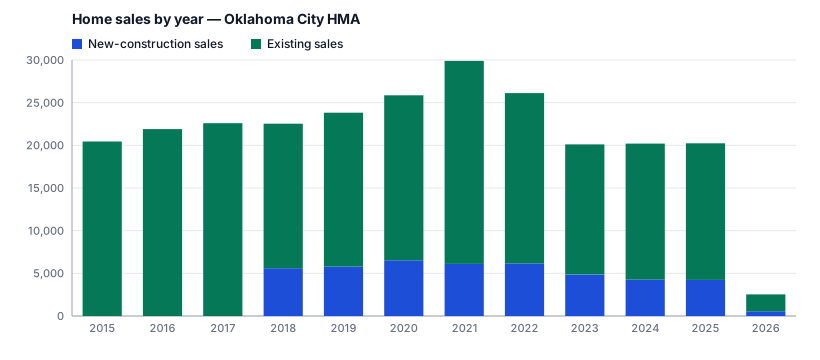
The resale home sales market in the Oklahoma City, OK metropolitan area experienced fluctuations from 2010 through 2019, reflecting broader economic trends. In 2013, there were 22,125 existing home sales, marking the beginning of a period of growth. This upward trend continued into 2014, with sales increasing to 22,737 homes. However, in 2015, the market saw a decline to 20,447 sales, before rebounding to 21,908 in 2016. The market continued to strengthen in 2017, reaching 22,595 sales. A significant drop occurred in 2018, with sales falling to 16,939, but the market recovered slightly in 2019 with 18,031 sales. This period was characterized by a gradual recovery from the Great Recession, with fluctuations reflecting changes in economic conditions and consumer confidence.
The years 2020 and 2021 marked a significant boom in the resale home sales market in the Oklahoma City metropolitan area, driven by historically low interest rates. In 2020, the number of existing home sales increased to 19,340, as buyers took advantage of favorable borrowing conditions. This trend continued into 2021, which was the peak year for the decade, with 23,790 homes sold. The surge in sales during this period was indicative of the strong demand for housing, as well as the increased purchasing power of consumers due to lower mortgage rates.
Following the peak in 2021, the resale home sales market in the Oklahoma City metropolitan area experienced a slowdown, influenced by rising interest rates. In 2022, the number of existing home sales decreased to 19,952, down from the previous year's peak. The decline continued into 2023, with sales falling to 15,249, representing a 23.5 percent decrease from 2022. The trend of declining sales persisted into 2024, with a slight increase to 15,937 homes sold, which was a 4.5 percent increase from 2023. This period of slowdown reflects the impact of higher interest rates on housing affordability and consumer demand.
New Home Sales
New home sales in the Oklahoma City, OK metropolitan area exhibited growth from 2018 through 2019. In 2018, there were 5,599 new home sales, which increased to 5,793 in 2019. This growth represents an increase of 194 homes, or 3.5 percent. The increase in new home sales during this period reflects a strengthening housing market in the metropolitan area, supported by favorable economic conditions and population growth.
The period from 2020 to 2022 saw a surge in new home sales, influenced by the pandemic-era housing market dynamics. In 2020, new home sales rose to 6,523, marking an increase of 730 homes, or 12.6 percent, from 2019. This upward trend continued into 2021, with 6,105 new home sales, although this represented a decrease from the previous year. The peak year for new home sales during this period was 2020, driven by low mortgage rates and increased demand for housing as more people sought larger living spaces due to remote work and lifestyle changes.
The trajectory of new home sales in the Oklahoma City, OK metropolitan area shifted downward beginning in 2023. During this year, new home sales totaled 4,856, a decline of 1,313 homes, or 21.3 percent, from 2022. This downward trend continued into 2024, with sales decreasing to 4,266, down from 4,856 in 2023, representing a further decline of 590 homes, or 12.1 percent. In the first two months of 2026, there have been 549 new home sales, indicating a continued decrease in sales activity. The decline in new home sales during this period may be attributed to rising interest rates and a cooling housing market as economic conditions stabilize post-pandemic.
Home-sales totals — Oklahoma City HMA, annual
| Year | New-construction sales | Existing sales | Total |
|---|---|---|---|
| 2014 | — | 22,737 | 22,737 |
| 2015 | — | 20,447 | 20,447 |
| 2016 | — | 21,908 | 21,908 |
| 2017 | — | 22,595 | 22,595 |
| 2018 | 5,599 | 16,939 | 22,538 |
| 2019 | 5,793 | 18,031 | 23,824 |
| 2020 | 6,523 | 19,340 | 25,863 |
| 2021 | 6,105 | 23,790 | 29,895 |
| 2022 | 6,169 | 19,952 | 26,121 |
| 2023 | 4,856 | 15,249 | 20,105 |
| 2024 | 4,266 | 15,937 | 20,203 |
| 2025 | 4,238 | 16,005 | 20,243 |
| 2026 | 549 | 1,980 | 2,529 |
Resale Home Sales Prices
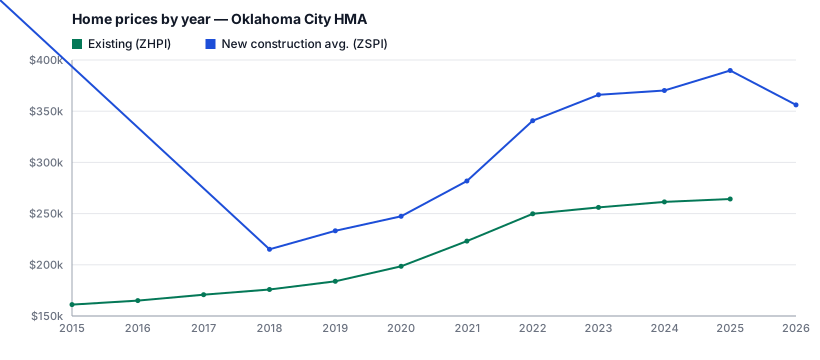
The resale home prices in the Oklahoma City, OK metropolitan area experienced a significant increase from 2020 to 2022. In 2020, the average resale home price was $198,493.60, which rose to $223,126.67 in 2021, marking a 12.4 percent increase. The upward trend continued in 2022, with the average price reaching $249,822.37, representing an 11.9 percent increase from the previous year. This period of rapid price escalation reflects a strong demand for housing in the metropolitan area, driven by factors such as low interest rates and increased migration to the region.
Since 2023, the pace of price increases has moderated. The average resale home price in 2023 was $256,098.80, up by 2.5 percent from 2022. In 2024, the price further increased to $261,467.17, a 2.1 percent rise from the previous year. The current year, 2025, shows a continued but slower growth, with the average price reaching $264,269.44. This moderation in price growth suggests a stabilization in the housing market, possibly influenced by changing economic conditions and adjustments in housing supply and demand dynamics.
Comparing the recent trends to the pre-pandemic period, the average annual pace of price increases was typically around 5 to 6 percent. For instance, from 2013 to 2019, the average resale home prices rose from $150,884.37 to $183,933.44, reflecting a steady growth pattern. The rapid increases observed during the pandemic years significantly outpaced this historical average. However, the current moderation aligns more closely with the pre-pandemic growth rates, indicating a return to more sustainable price appreciation levels in the Oklahoma City, OK metropolitan area.
New Home Sales Prices
The average sales price of new homes in the Oklahoma City, OK metropolitan area has experienced significant growth over the past decade. In 2018, the average sales price was $215,168. By 2025, this figure had increased to $389,706, marking an overall rise of approximately 81.1 percent. This upward trajectory reflects a consistent annual increase, with notable jumps in 2021 and 2022, where the average sales prices rose to $281,884 and $340,680, respectively. The increase in prices during these years can be attributed to heightened demand for new homes, coupled with supply chain constraints that affected construction costs. The period from 2018 to 2025 highlights a robust growth pattern in the new home market within the metropolitan area.
In the more recent two-year period, the average sales price of new homes in the Oklahoma City, OK metropolitan area has shown a mixed trend. From 2023 to 2024, the average sales price increased slightly from $366,058 to $370,214, representing a modest rise of 1.1 percent. However, in 2025, the average sales price surged to $389,706, an increase of 5.3 percent from the previous year. This upward trend was followed by a decline in early 2026, with the average sales price dropping to $356,153. The recent fluctuations in new home prices may be influenced by a combination of builder incentives aimed at stimulating sales and a shift in the mix of homes being sold, potentially favoring lower-priced units. These dynamics suggest a market adjusting to changing economic conditions and consumer preferences.
Average sale price — Oklahoma City HMA, annual
| Year | New-construction average | Existing (year-end) |
|---|---|---|
| 2018 | $215,168 | $175,872 |
| 2019 | $233,194 | $183,933 |
| 2020 | $247,374 | $198,494 |
| 2021 | $281,884 | $223,127 |
| 2022 | $340,680 | $249,822 |
| 2023 | $366,058 | $256,099 |
| 2024 | $370,214 | $261,467 |
| 2025 | $389,706 | $264,269 |
| 2026 | $356,153 | — |
Affordability
The affordability of home sales in the Oklahoma City, OK metropolitan area is influenced by the current price levels of existing homes, which average $265,327. This price level, coupled with prevailing mortgage rates, suggests a significant monthly cost for potential homebuyers. Although specific mortgage rates are not provided, the general trend of rising interest rates nationally implies increased borrowing costs, which can impact affordability. The year-over-year increase in existing home prices by 1.0 percent further adds to the financial burden on buyers, potentially limiting access to homeownership for some households.
In the Oklahoma City metropolitan area, homeowners face various financial pressures that can affect affordability. While the area does not experience the same level of homeowners-insurance premium increases as seen in states like Florida, other costs such as property taxes and maintenance fees can still pose challenges. Property taxes, in particular, can be a significant expense for homeowners, and any increases can strain household budgets. Additionally, homeowners' association (HOA) fees, although generally lower than in coastal areas, still contribute to the overall cost of homeownership and can impact affordability for residents.
First-time homebuyers in the Oklahoma City metropolitan area may find it increasingly difficult to enter the housing market due to these affordability challenges. The rising prices of existing homes, combined with potential increases in mortgage rates, create barriers to entry for new buyers. However, if mortgage rates were to ease over the forecast period, it could provide some relief and improve affordability, making homeownership more accessible for first-time buyers. This potential decrease in rates could stimulate demand and support a more balanced housing market in the region.
Distressed Sales and Delinquent Mortgages
During the years following the Great Recession, from 2010 to 2013, distressed sales in the nation were notably high as the housing market struggled to recover. As the economy gradually improved throughout the 2010s, the incidence of distressed sales declined steadily. This trend continued until the onset of the COVID-19 pandemic, during which government interventions, such as mortgage forbearance programs, contributed to a significant reduction in distressed sales, reaching a trough from 2020 to 2022. However, since 2023, there has been a modest uptick in distressed sales as these temporary measures have phased out and the market adjusts to new economic conditions.
In the Oklahoma City, OK metropolitan area, the mortgage-delinquency rate is likely near historic lows. This stability is largely attributed to the accumulated home-price equity that has constrained the potential rise in delinquencies. Although specific MSA-level delinquency data is not currently integrated, the broader trends suggest that homeowners in the area have benefited from increased equity, providing a buffer against financial distress. The absence of precise local data notwithstanding, the overall economic environment and housing market dynamics in the metropolitan area indicate a resilient position in terms of mortgage delinquencies.
Geographic Submarkets
The Oklahoma City Housing Market Area (HMA) is centered around the principal city of Oklahoma City. This metropolitan area typically features a diverse range of submarkets, including the core urban area, suburban neighborhoods, and more rural exurban regions. The core city of Oklahoma City often presents a higher concentration of multifamily housing and higher-density residential developments, catering to a diverse population with varying housing needs. In contrast, suburban and exurban submarkets may offer larger single-family homes and more spacious lots, appealing to families and individuals seeking more space and a quieter environment. The price levels in these submarkets can vary significantly, with urban areas generally commanding higher prices due to their proximity to amenities and employment centers, while suburban and exurban areas may offer more affordable options.
In the future, differentiation among submarkets in the Oklahoma City HMA is expected to continue, driven by the availability of developable land and market demand. Submarkets with more available land, particularly in the suburban and exurban areas, are likely to absorb a greater share of new construction activity. This could lead to an increase in housing supply and potentially moderate price growth in these areas. Conversely, more established submarkets, particularly those with desirable amenities or proximity to the core city, may experience stronger price appreciation due to limited land availability and sustained demand. The balance between new construction and price appreciation will be a key factor in shaping the housing market dynamics across the metropolitan area during the forecast period.
The geographic submarkets within the Oklahoma City HMA are further characterized by various location fundamentals, which will be detailed in the "Location Fundamentals" section of this report. These fundamentals include factors such as crime rates, quality of schools, environmental hazards, and accessibility to major employment centers and transportation networks. Each submarket's unique combination of these factors contributes to its overall attractiveness and can influence housing demand and price trends. Understanding these location fundamentals is essential for stakeholders looking to make informed decisions in the housing market, as they provide valuable insights into the strengths and challenges of each submarket within the HMA.
Homebuyer Profile
The Oklahoma City, OK metropolitan area, like many sunbelt metros, attracts a diverse range of homebuyers, including retirees and move-down buyers from higher-cost metropolitan areas. These buyers are often drawn to the region due to its favorable climate and lower cost of living compared to other parts of the nation. The area also sees a significant number of returning families who are attracted by the combination of economic opportunities and a more affordable housing market. This demographic trend is consistent with broader patterns observed in sunbelt regions, where an aging population contributes to a steady demand for housing.
The share of cash buyers in the Oklahoma City metropolitan area is typically elevated, a common characteristic in markets with a significant presence of retirees and move-down buyers. This trend implies that the local housing market may be less sensitive to fluctuations in mortgage rates compared to markets with a higher reliance on financed purchases. Cash buyers, who are less affected by interest rate changes, can provide a stabilizing effect on the market, maintaining demand even when mortgage rates rise. This dynamic can lead to a more resilient housing market in the face of economic shifts that might otherwise dampen buyer activity.
Given the composition of the market, the share of FHA and VA loans may be influenced by the presence of first-time homebuyers and veterans in the area. These loan programs are particularly attractive to buyers who may not have substantial down payments or who are seeking more favorable loan terms. The availability and utilization of FHA and VA loans can play a crucial role in supporting homeownership among these groups, contributing to the overall diversity and stability of the housing market in the Oklahoma City metropolitan area.
Sales Construction
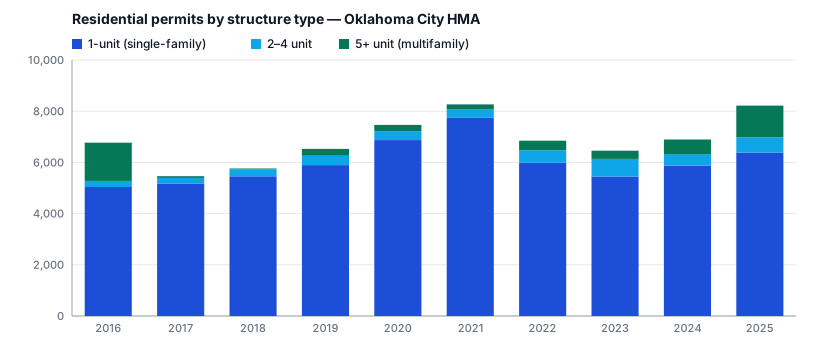
During the early 2010s, the pace of residential construction in the Oklahoma City, OK metropolitan area was relatively subdued. In 2016, the metropolitan area reported the construction of 5,039 single-family homes, 238 units in duplexes, triplexes, and quadplexes, and 1,493 units in buildings with five or more units. The following year, in 2017, there was a slight increase in single-family home construction to 5,167 units, while the number of units in duplexes, triplexes, and quadplexes decreased to 225. Notably, there was a significant decline in the construction of units in buildings with five or more units, which fell to 67 units. This trend of moderate construction activity continued through 2018, with single-family home construction rising to 5,456 units and a slight increase in duplex, triplex, and quadplex construction to 273 units. However, the construction of units in buildings with five or more units continued to decline, reaching 31 units.
The period from 2020 to 2022 marked a surge in residential permitting in the Oklahoma City metropolitan area, reflecting a post-pandemic pattern of increased construction activity. In 2020, the number of single-family homes permitted rose to 6,873 units, up from 5,895 units in 2019. The construction of duplexes, triplexes, and quadplexes also saw an increase, with 345 units permitted, while the number of units in buildings with five or more units was 246. This upward trend continued into 2021, with single-family home permits reaching 7,743 units, marking a significant increase from the previous year. Although the number of duplex, triplex, and quadplex units permitted decreased slightly to 324, the construction of units in buildings with five or more units also saw a decline to 198 units. In 2022, the number of single-family homes permitted decreased to 5,982 units, while the construction of duplexes, triplexes, and quadplexes increased to 489 units. The number of units in buildings with five or more units rose to 375, indicating a shift in the types of housing being constructed.
In the latest two years, residential permitting in the Oklahoma City metropolitan area has shown signs of rising activity. In 2023, the number of single-family homes permitted was 5,449 units, a slight decrease from the previous year. However, the construction of duplexes, triplexes, and quadplexes increased significantly to 687 units, while the number of units in buildings with five or more units decreased to 322. The year 2024 saw a rebound in single-family home construction, with 5,880 units permitted, and a decrease in duplex, triplex, and quadplex construction to 435 units. Notably, the construction of units in buildings with five or more units increased substantially to 581 units. This increase in multi-family construction may be driven by a growing demand for rental housing and a shift in consumer preferences towards more diverse housing options. The trend continued into 2025, with single-family home permits rising to 6,387 units and a significant increase in the construction of duplexes, triplexes, and quadplexes to 590 units. The number of units in buildings with five or more units surged to 1,241, indicating a robust demand for multi-family housing in the metropolitan area.
Annual sales permitting — Oklahoma City HMA
| Year | SF + townhome | 2-4 units | Total sales permits |
|---|---|---|---|
| 2016 | 5,039 | 238 | 5,277 |
| 2017 | 5,167 | 225 | 5,392 |
| 2018 | 5,456 | 273 | 5,729 |
| 2019 | 5,895 | 368 | 6,263 |
| 2020 | 6,873 | 345 | 7,218 |
| 2021 | 7,743 | 324 | 8,067 |
| 2022 | 5,982 | 489 | 6,471 |
| 2023 | 5,449 | 687 | 6,136 |
| 2024 | 5,880 | 435 | 6,315 |
| 2025 | 6,387 | 590 | 6,977 |
Source: U.S. Census Bureau Building Permits Survey, full-year county files.
Forecast
The Oklahoma City, OK metropolitan area is projected to experience a demand for 24,860 home sales during the next three years. This demand reflects the ongoing growth and economic vitality of the region. The current construction pipeline, with 5,449 units under construction, will address a portion of this demand, contributing to the housing supply and potentially moderating price pressures. The balance between demand and supply will be crucial in maintaining market stability and affordability in the metropolitan area.
The metropolitan area has seen consistent growth, driven by factors such as employment opportunities and net in-migration. The demand for housing is expected to remain robust as the area continues to attract new residents and businesses. The construction of new housing units will play a significant role in meeting the needs of the growing population, ensuring that the market remains dynamic and responsive to changes in demand.
As the metropolitan area continues to develop, the housing market will need to adapt to the evolving needs of its residents. The construction of new units is a positive indicator of the market's ability to respond to increased demand. However, the pace of construction and the types of units being built will be critical in determining how well the market can accommodate the projected demand for home sales.
The forecast period will be marked by a careful balance between supply and demand, with the potential for shifts in market dynamics as new units are completed and absorbed. The ability of the market to maintain this balance will be essential in ensuring that housing remains accessible and affordable for the residents of the Oklahoma City, OK metropolitan area. The ongoing construction efforts will be a key factor in shaping the future of the housing market in the region.
In conclusion, the Oklahoma City, OK metropolitan area is poised for continued growth in the housing market, with a projected demand for 24,860 home sales over the next three years. The 5,449 units currently under construction will help meet this demand, supporting the region's economic expansion and providing opportunities for new residents. The interplay between demand and supply will be a critical factor in determining the overall health and sustainability of the housing market during the forecast period.
Table 6. Demand for New Sales Units — Oklahoma City HMA, 3-Year Forecast
| Sales Units | |
|---|---|
| Demand | 24,860 |
| Under Construction | 5,449 |
Rental Market
Current Conditions and Historic Trends
The rental housing market in the Oklahoma City, OK metropolitan area is currently balanced. As of February 2026, the apartment vacancy rate is 7.0 percent, up from 5.7 percent a year earlier, indicating an increase of 1.3 percentage points. This rise in vacancy rates suggests a shift in market dynamics over the past year, potentially influenced by new apartment deliveries or changes in demand.
The average rent in the metropolitan area is $1,081, reflecting a slight decrease of 0.18 percent from the previous year. Over the past three years, rent levels have shown fluctuations, with a general upward trend until mid-2024, followed by a period of stabilization and slight decline. This trajectory indicates a cooling in rent growth, possibly due to increased supply or changing economic conditions affecting rental demand.
Historically, the rental market in Oklahoma City experienced tightening conditions from 2010 through 2021, characterized by decreasing vacancy rates and rising rents. This trend was driven by strong economic growth and limited new supply. However, since 2022, the market has softened as a surge in post-pandemic apartment deliveries has eased pressure on the rental market. This increase in supply has contributed to the current balanced market conditions and the recent rise in vacancy rates.
The vacancy rate series reveals specific inflection points, particularly in mid-2025, when vacancy rates began to rise more sharply. This period coincides with a notable increase in new apartment completions, which likely contributed to the higher vacancy rates observed in the latter half of 2025. The subsequent stabilization of vacancy rates in early 2026 suggests that the market is adjusting to the increased supply, with demand beginning to align more closely with the available inventory.
Table 7. Rental and Apartment Quick Facts — Oklahoma City HMA
| Value | YoY Δ | |
|---|---|---|
| Overall rental vacancy rate | 7.0% | +1.3 pp |
| Average rent (all units) | $1,081 | -0.2% |
Rental Construction
Rental construction activity in the Oklahoma City, OK metropolitan area experienced a subdued period in the early 2010s, following the broader national trend of reduced construction activity after the Great Recession. During this time, the issuance of permits for multifamily units with five or more units was limited, reflecting cautious developer sentiment and a slow recovery in the housing market. This period set the stage for a gradual increase in construction activity as economic conditions improved and demand for rental housing began to rise.
From 2018 through 2022, the Oklahoma City metropolitan area saw a varied cycle of multifamily permitting activity. In 2018, only 31 multifamily units were permitted, marking a low point in the cycle. However, the number of permits increased significantly in subsequent years, peaking in 2022 with 375 units permitted. This increase in construction activity was driven by a combination of factors, including a growing population and a strengthening local economy. The years 2020 and 2021 presented challenges due to labor and material constraints, which affected the pace of construction and the ability to meet rising demand. Despite these challenges, the metropolitan area managed to sustain a moderate level of construction activity during this period.
In the most recent years, from 2023 to 2025, the Oklahoma City metropolitan area has experienced a notable increase in multifamily permitting activity. In 2023, 322 units were permitted, followed by a significant rise to 581 units in 2024. The upward trend continued into 2025, with 1,241 units permitted, indicating a robust response to the demand for rental housing. However, this increase in construction activity has coincided with a cooling in the market as vacancy rates have risen, suggesting a potential oversupply in the near term. This dynamic reflects the ongoing adjustments in the rental market as developers respond to changing economic conditions and housing demand in the metropolitan area.
Annual rental permitting — Oklahoma City HMA
| Year | 5+ unit rental permits |
|---|---|
| 2016 | 1,493 |
| 2017 | 67 |
| 2018 | 31 |
| 2019 | 265 |
| 2020 | 246 |
| 2021 | 198 |
| 2022 | 375 |
| 2023 | 322 |
| 2024 | 581 |
| 2025 | 1,241 |
Source: U.S. Census Bureau Building Permits Survey, full-year county files.
Recent Apartment Developments
- Alley's End — Located in downtown Oklahoma City, this 214-unit affordable housing community will serve residents earning between 30%-80% of the Area Median Income.
- Liberty Creek Village — A 516-unit development in Oklahoma City offering a mix of unit types.
- Stonehorse Crossing — A 300-unit apartment complex in Oklahoma City with various unit configurations.
- Hartford at 10th — This 102-unit project is part of the lease-up phase in Oklahoma City.
- Times Square OKC — A 327-unit development under construction in Oklahoma City, featuring a variety of unit types.
- Steelyard Phase II — A 150-unit apartment project under construction in Oklahoma City.
Rent Burden and Affordability
The average rent in the Oklahoma City, OK metropolitan area is approximately $1,081. To remain under the HUD 30-percent rent-to-income threshold, a household would need a monthly gross income of approximately $3,604, which translates to an annual income of about $43,249. This income requirement suggests that a significant portion of households in the metropolitan area may struggle to meet this threshold, given that median incomes in many areas may fall below this level. Consequently, a substantial share of households could be spending more than 30 percent of their income on rent, indicating a potential rent burden.
The slight decrease in average rent by 0.18 percent over the past year suggests a stabilization in rental costs, which may provide some relief to renters. However, the interplay between rent levels, vacancy rates, and local wage growth remains critical. In metropolitan areas with a strong tourism sector, such as Oklahoma City, many renter households may still experience rent burdens despite the modest decline in rent. This is particularly true if wage growth has not kept pace with housing costs, exacerbating affordability challenges for lower-income households.
Rental subsidies play a crucial role in alleviating rent burdens for low-income households in the Oklahoma City metropolitan area. Programs such as Housing Choice Vouchers, Low-Income Housing Tax Credits (LIHTC), and USDA Section 515 rural rental housing assistance are vital in providing affordable housing options. These programs help to moderate the impact of high rental costs and ensure that low-income families can access safe and affordable housing. The continued availability and expansion of these subsidies are essential to addressing the affordability challenges faced by many households in the area.
Rental Submarkets
The rental market in the Oklahoma City metropolitan area exhibits a typical pattern observed in many regions, where rental rates are generally higher in coastal and core-city submarkets compared to interior and exurban areas. In Oklahoma City, the principal city submarket tends to have higher rental rates due to its proximity to employment centers, amenities, and cultural attractions. Conversely, the interior and exurban submarkets, which are further from the city center, typically offer lower rental rates. These areas often experience higher vacancy rates as they attract residents seeking more affordable housing options, albeit with longer commutes to the city center.
In recent years, new multifamily supply in the Oklahoma City metropolitan area has been concentrated primarily in the principal city submarket. This influx of new units has contributed to a stabilization of vacancy rates in the area, as the increased supply has been met with steady demand. The development of new multifamily properties in the core city has been driven by a combination of factors, including economic growth and a preference for urban living among younger demographics. As a result, the vacancy rates in the principal city submarket have remained relatively stable, while the interior and exurban submarkets have seen less new construction activity and consequently higher vacancy rates.
Looking ahead, the rental market in the Oklahoma City metropolitan area is expected to continue its current trajectory over the next 18 to 24 months. The principal city submarket is likely to see ongoing demand for rental units, supported by economic expansion and population growth. This demand is anticipated to absorb much of the new supply, maintaining stable vacancy rates. In contrast, the interior and exurban submarkets may experience slower growth in rental demand, potentially leading to higher vacancy rates if new supply is introduced. Overall, the rental market is expected to remain balanced, with variations in vacancy rates and rental prices reflecting the differing characteristics of each submarket.
HUD Fair Market Rents Context
Fair Market Rents (FMRs) represent the 40th percentile of gross rents for standard-quality units within a given area and are utilized in the Housing Choice Voucher program to determine payment standards. For fiscal year 2026, the FMRs in the Oklahoma City, OK metropolitan area are set at $809 for a studio, $1,017 for a one-bedroom, $1,244 for a two-bedroom, $1,257 for a three-bedroom, and $1,857 for a four-bedroom unit. These figures provide a benchmark for affordable housing assistance and are compared against the current average market-rate rent in the area, which is approximately $1,081. The FMRs for studio and one-bedroom units are below the current average rent, while the FMR for two-bedroom units is slightly above the average. The FMR for three-bedroom units is nearly aligned with the average, and the FMR for four-bedroom units is significantly higher than the current average rent.
The implications for affordable-housing providers and voucher recipients in the Oklahoma City metropolitan area are significant. The FMRs for fiscal year 2026 suggest that the payment standards for smaller units may not fully cover the current market-rate rents, potentially creating a gap for voucher holders seeking studio and one-bedroom units. Conversely, the FMRs for larger units, particularly four-bedroom units, exceed the current average rent, which may provide more flexibility for voucher recipients in securing housing. As the forecast period progresses, it will be crucial for FMRs to keep pace with any observed market rent growth to ensure that the Housing Choice Voucher program remains effective in assisting low-income families. The alignment or disparity between FMRs and market rents will influence the accessibility and affordability of housing for voucher recipients in the area.
HUD Fair Market Rents (FY2026) — Oklahoma City HMA
| Bedrooms | FY2026 FMR | Current market rent |
|---|---|---|
| Studio (0 BR) | $809 | — |
| 1 BR | $1,017 | — |
| 2 BR | $1,244 | — |
| 3 BR | $1,257 | — |
| 4 BR | $1,857 | — |
HUD Fair Market Rents are used for the Housing Choice Voucher program and as benchmarks for other HUD programs. They reflect the 40th percentile of gross rents for standard-quality rental units.
Forecast
The rental housing market in the Oklahoma City, OK metropolitan area is projected to experience demand for approximately 11,699 new rental units during the next three years. This demand reflects the ongoing growth and development within the metropolitan area, driven by factors such as population growth and economic expansion. The current construction pipeline includes 919 rental units under construction, which will contribute to meeting a portion of this demand. However, the existing inventory of vacant rental units, combined with the units under construction, suggests that additional construction is not needed at this time. Excessive new construction could lead to further softening of the rental market, potentially impacting rental rates and occupancy levels.
The metropolitan area has seen a steady increase in rental demand over recent years, supported by a strong local economy and a growing population. The service-providing sectors, which have been a significant driver of employment growth, continue to attract new residents to the area. This influx of new residents has contributed to the demand for rental housing, as many individuals and families seek flexible living arrangements. The forecasted demand for rental units aligns with these trends, indicating a continued need for rental housing to accommodate the expanding population.
During the 12 months ending October 2023, the rental market in Oklahoma City has shown resilience, with stable occupancy rates and moderate rent increases. The balance between supply and demand has been maintained, preventing significant fluctuations in rental prices. The projected demand for rental units over the next three years suggests that this equilibrium will continue, provided that new construction remains aligned with market needs. Developers and policymakers should carefully monitor market conditions to ensure that supply does not outpace demand, which could lead to an oversupply situation.
The rental market dynamics in the Oklahoma City metropolitan area are influenced by various factors, including economic conditions, demographic trends, and housing affordability. The area's affordability relative to other metropolitan areas has been a key factor in attracting new residents, further driving rental demand. As the metropolitan area continues to grow, maintaining a balanced rental market will be crucial to supporting economic development and ensuring housing stability for residents.
In summary, the Oklahoma City metropolitan area is expected to require approximately 11,699 new rental units over the next three years. With 919 units currently under construction, the market is positioned to meet a portion of this demand. However, additional construction beyond the current pipeline is not needed, as it could lead to market softening. The focus should remain on aligning new development with actual demand to maintain a healthy rental market.
Table 8. Demand for New Rental Units — Oklahoma City HMA, 3-Year Forecast
| Rental Units | |
|---|---|
| Demand | 11,699 |
| Under Construction | 919 |
Location Fundamentals
The standard HUD HMP sections above describe the metropolitan area's housing market itself. This section characterizes the underlying drivers of price formation — safety, schools, natural-hazard exposure, infrastructure, policy, and demographic tailwinds — from Zoomprop's proprietary thematic layers. These signals are the most-replicated non-housing inputs in the hedonic-pricing literature.
The Oklahoma City metropolitan area exhibits several key location fundamentals that influence its housing market. The median school rating of 5.50 suggests moderate educational quality, which may attract families seeking affordable housing options. Hail is identified as the top peril with a score of 93.99, potentially impacting insurance costs and property values. The average walk score of 28.6 indicates limited walkability, which could affect demand for housing in more car-dependent neighborhoods. Over the past three years, the population growth rate of 4.1 percent and income growth of 16.5 percent suggest a robust economic environment, likely contributing to increased demand for housing and upward pressure on home prices.
Safety
- Across the Oklahoma City metropolitan area, Zoomprop aggregated 27,769 reported incidents over the most recent six months and 4,435 in the last 30 days.
| Crime type | Last 30 days | Last 6 months |
|---|---|---|
| theft | 793 | 5,360 |
| assault | 606 | 4,172 |
| arrest | 435 | 2,399 |
| burglary | 234 | 1,748 |
| vandalism | 132 | 728 |
- Most recent FBI UCR data for the state (2025) shows a violent-crime offense rate of 22.8 per 100,000 residents and a property-crime offense rate of 89.0 per 100,000 residents.
Source: FBI Uniform Crime Reporting (UCR), state-level, latest full year available.
Schools
- 432 K-12 schools operate within the MSA (24 with GreatSchools ratings).
- Median GreatSchools rating is 5.5 out of 10; 10 schools score 8 or higher and 9 score 3 or lower.
- Average high-school graduation rate is 49.1 percent.
- Average student-to-teacher ratio is 16.8 to 1.
- Average share of students classified as low-income across schools in the MSA is 63.9 percent.
Top-rated schools in the Oklahoma City metropolitan area
| School | City | District | GreatSchools | Grad. rate |
|---|---|---|---|---|
| Harding Fine Arts Academy | Oklahoma City | Harding Fine Arts (Charter) | 10.0 | 95.0% |
| Dove Science Academy Hs | Oklahoma City | Dove Schools Of Okc (Charter) | 10.0 | 99.0% |
| Classen Ms Of Advanced Studies | Oklahoma City | Oklahoma City | 9.0 | — |
| Deer Creek Intermediate School | Edmond | Deer Creek | 9.0 | — |
| Dove Science Academy Middle School South Okc | Oklahoma City | Dove Schools Of Okc (Charter) | 9.0 | — |
Natural-hazard exposure (FEMA National Risk Index)
- Of 419 census tracts in the MSA, 215 (51%) rated Relatively Low; 144 (34%) rated Relatively Moderate; 41 (10%) rated Very Low; 19 (5%) rated Relatively High.
- Leading perils by average FEMA NRI risk score across the MSA's tracts: Hail (score 94.0); Heat Wave (score 84.1); Tornado (score 77.4); Ice Storm (score 74.9); Cold Wave (score 73.2).
- The MSA's tracts average a social-vulnerability index of 48.7 and a community-resilience score of 40.2 (both on FEMA's 0-100 scale).
Source: FEMA National Risk Index, mapped to census tracts and rolled up to the MSA. Flood and wildfire capitalization into home prices is well-documented post-2017 disclosure (Bin & Polasky 2004; Keys & Mulder 2024).
Accessibility & infrastructure
- Across 57 neighborhoods measured, the Oklahoma City metropolitan area has an average Walk Score of 28.6 and an average Bike Score of 33.3.
- 4 neighborhoods score above 70 on Walk Score ("very walkable"); 46 score below 50 ("car-dependent").
- The MSA is served by 3,257 public-transit stops operated by 3 transit agencies across 8 neighborhoods.
Demographic tailwinds
- Population-weighted median household income across the MSA is $67,773.
- Three-year median-income growth averages 16.5 percent.
- Three-year population growth averages 4.1 percent.
- Average neighborhood-level unemployment rate (ACS-derived) is 4.6 percent.
- Average ACS-reported median gross rent is $871.
- Average ACS-reported median owner-occupied home value is $145,646.
Terminology, Definitions, and Notes
A. Definitions
| Term | Definition |
|---|---|
| Apartment Vacancy Rate | Vacancy rate for market-rate and mixed market-rate / affordable general-occupancy apartment properties with five or more units. |
| Building Permits | Residential building permit counts do not necessarily reflect all residential building activity. Some units are constructed without a permit or are classified as commercial. Zoomprop does not apply analyst adjustments for these unpermitted units in this document. |
| CBSA | Core-Based Statistical Area — the Census Bureau's statistical geography comprising one or more counties anchored by an urban center of at least 10,000 population. Metropolitan Statistical Areas (MSAs) are CBSAs with an urban center of ≥50,000. |
| Demand (3-Year Forecast) | Estimated housing production needed to achieve a balanced market at the end of the forecast period, given current conditions, trend growth, losses, and frictional vacancy. The estimates do not account for units currently under construction or in the development pipeline. |
| Distressed Sales | Short sales and real estate owned (REO) sales. |
| Existing Home Sales | Includes resales, short sales, and REO sales. |
| Fair Market Rent (FMR) | HUD-published rents at the 40th percentile of gross rents for standard-quality units, used for the Housing Choice Voucher program and other HUD programs. |
| Forecast Period | 3 years from the as-of date. |
| Frictional Vacancy | A healthy baseline vacancy rate (≈2.5 %) that supports normal tenant turnover; added to net household growth when computing 3-year demand. |
| Home Sales | Includes single-family home, townhome, and condominium sales. |
| Homeownership Rate | Share of occupied housing units that are owner-occupied. |
| HUD Housing Choice Voucher | Federal tenant-based rental-assistance program that pays participating landlords the difference between 30 % of a qualifying tenant's income and the local Fair Market Rent. |
| LIHTC | Low-Income Housing Tax Credit — the federal program that subsidizes construction and rehabilitation of rent-restricted rental housing via tax credits. |
| Months of Inventory | Ratio of homes currently for sale to the monthly home-sale rate. Less than 3 months is a tight market; more than 7 months is soft. |
| Net Natural Decline | Resident deaths exceed resident births. |
| PEP | Census Bureau Population Estimates Program — annual midyear population estimates at national, state, metropolitan, county, and minor-civil-division level, between decennial censuses. |
| Rent Burden | Household spends more than 30 % of gross income on gross rent (HUD standard); "severely rent-burdened" is the 50 %+ threshold. |
| Rental Vacancy Rate | Includes apartments and other rental units such as single-family, multifamily, and mobile homes for rent. |
| Resales | Home closings that have no ties to either new home closings (builders), foreclosures, or short sales. |
| Seriously Delinquent Mortgages | Mortgages 90 or more days delinquent or in foreclosure. |
B. Data Lineage
- Employment & unemployment (Economic Conditions): U.S. Bureau of Labor Statistics — CES for payrolls by supersector, LAUS for unemployment at MSA/state/nation, QCEW (BLS/Florida Commerce equivalents) as a fallback where CES is suppressed at this metro.
- Population & households (Population and Households): U.S. Census Bureau Population Estimates (PEP V2025 flat files), 2020 decennial census base, American Community Survey 1- and 5-year data.
- Migration flows: U.S. Census Bureau ACS 5-year Metro-to-Metro Migration Flows.
- Home sales and prices (Home Sales Market): Zoomprop market data (metro home-price, sales-volume, and new-construction-price series); Freddie Mac (30-year fixed-rate mortgage); Zoomprop listing aggregates (months of inventory, days on market).
- Residential permits (Home Sales Market, Rental Market): U.S. Census Bureau Building Permits Survey — full-year county files aggregated to MSA.
- Rental market: Zoomprop rent and vacancy aggregates; unit-count series from Zoomprop; developer research via Tavily.
- Forecasts: Zoomprop trend projections over the most recent 5-year window of the underlying series, plus a 2.5 % frictional-vacancy adjustment for the housing-demand calculation.